Talk to The Last Wish like its author wrote you back.
Get the ideas that fit your life — not generic summaries.
- Chat with the book
- Audiobook-style main ideas
- Adapts to your life and goals
- Helps you take action
What it argues
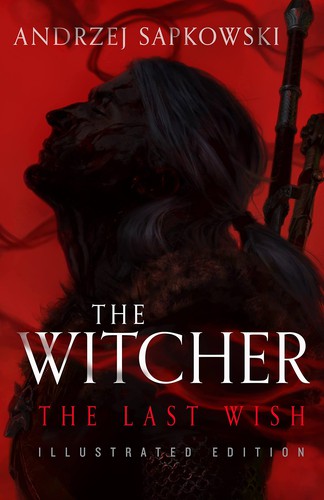
The Last Wish is the first Witcher book to be published in English, though not the first written, and it introduces readers to Geralt of Rivia — a professional monster-hunter in a world that is running out of the kind of monsters worth hunting. Sapkowski structures the book as a frame narrative: Geralt is recovering from wounds at a temple, and his memories unspool as a series of loosely connected short stories, each one a fairy-tale remix in which the familiar stories go sideways. Snow White is a criminal syndicate leader. Cinderella's prince is a predator. The Beast of Beauty and the Beast is someone the story tries to make you see clearly before it resolves.
The wit is the first thing most readers notice. Sapkowski knows the source material and writes each subversion with precision — the jokes are structural, not decorative. But the subversions are in service of a consistent argument: that the world is a morally complex place, that monsters are not always what they appear, and that Geralt's nominal neutrality — the Witcher code of not taking sides in human conflicts — is itself a kind of moral position that the world keeps refusing to let him hold cleanly.
What it gets right
- 1.
Sapkowski uses fairy tale retellings not for nostalgic subversion but as a structural device for asking what the familiar stories ask us to overlook.
- 2.
Geralt's neutrality is not a personality trait but a philosophical position that the plots test systematically — and the tests are fair, not stacked.
- 3.
The prejudice Geralt faces as a Witcher (mutant, outsider, unnatural) mirrors the prejudices he is often hired to act on, and the book is aware of the parallel.
What it covers
Who wrote it
Andrzej Sapkowski is a Polish author who worked as a businessman before winning a short story competition in 1986 with the first Geralt of Rivia story. He went on to write two short-story collections and a five-book saga comprising the full Witcher narrative. The series became one of the bestselling fantasy properties in European history and the basis for the CD Projekt Red video game trilogy, a Netflix series, and multiple other adaptations. Sapkowski has expressed ambivalence about the games' success and has been outspoken about the business terms of the early licensing agreements. He lives in Łódź, Poland, and continues to write.
