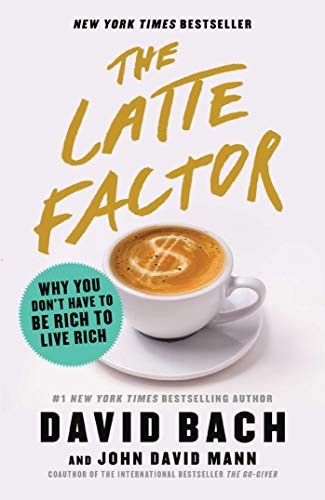
Talk to The Latte Factor like its author wrote you back.
Get the ideas that fit your life — not generic summaries.
- Chat with the book
- Audiobook-style main ideas
- Adapts to your life and goals
- Helps you take action
The Latte Factor, in detail
The Latte Factor is David Bach's parable-style retelling of his central financial concept, structured as a story following Zoey, a young woman who meets an older mentor in a New York coffee shop and over several days learns the principles Bach has been teaching for decades. The book is deliberately short — more novella than reference guide — and is designed to make the Latte Factor concept emotionally resonant for readers who might be resistant to straightforward personal finance instruction.
The core argument is that small habitual expenditures, redirected to savings and investment, compound into remarkable sums over time. Bach's famous calculation: five dollars a day, invested at historical stock market returns, becomes over a million dollars over forty years. The "latte" is a stand-in for any small recurring expense — takeout lunch, subscription services, vending machines, daily treats — that people spend without thinking. Redirecting even part of that automatic spending to automated investment changes the financial trajectory significantly.
The three principles of the Latte Factor, repeated through the story, are: pay yourself first, make it automatic, and think in terms of long-term compounding rather than short-term sacrifice. The parable format allows Bach to show these principles being internalized by a character rather than simply explained to the reader. Zoey's resistance to the ideas — she is broke, she doesn't earn enough, she can't afford to save — mirrors the objections most readers bring to personal finance, and the mentor's responses address them directly.
The book's limitation is visible in its format: the parable structure sacrifices depth and specificity for accessibility and emotional engagement. Readers who want to know exactly how to implement the framework — which accounts to open, which funds to choose, how much to save — will find the book deliberately incomplete. It is designed to create the motivation and the initial shift in thinking; the mechanics are covered in Bach's other books. As a gift for someone resistant to personal finance, as a quick read for someone who needs emotional reorientation before they can engage with practical details, it serves a genuine function.
The big ideas
- 1.
Small daily expenses, automated to savings instead, compound into significant wealth over decades. The math is real even if the specific latte example is symbolic.
- 2.
Pay yourself first: the most important financial habit is saving before spending, regardless of the dollar amount. Even small amounts, started early, matter.
- 3.
Make it automatic. A savings habit that depends on willpower and active decisions will fail. A savings system that happens without your participation will succeed.
