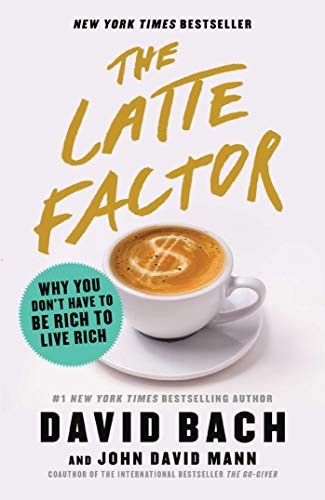
The Latte Factor by David Bach is a 2019 self-help book about small savings, compounding, conscious spending. Small daily expenses, automated to savings instead, compound into significant wealth over decades. The math is real even if the specific latte example is symbolic.
Summary
The Latte Factor is David Bach's parable-style retelling of his central financial concept, structured as a story following Zoey, a young woman who meets an older mentor in a New York coffee shop and over several days learns the principles Bach has been teaching for decades. The book is deliberately short — more novella than reference guide — and is designed to make the Latte Factor concept emotionally resonant for readers who might be resistant to straightforward personal finance instruction.
The core argument is that small habitual expenditures, redirected to savings and investment, compound into remarkable sums over time. Bach's famous calculation: five dollars a day, invested at historical stock market returns, becomes over a million dollars over forty years. The "latte" is a stand-in for any small recurring expense — takeout lunch, subscription services, vending machines, daily treats — that people spend without thinking. Redirecting even part of that automatic spending to automated investment changes the financial trajectory significantly.
The three principles of the Latte Factor, repeated through the story, are: pay yourself first, make it automatic, and think in terms of long-term compounding rather than short-term sacrifice. The parable format allows Bach to show these principles being internalized by a character rather than simply explained to the reader. Zoey's resistance to the ideas — she is broke, she doesn't earn enough, she can't afford to save — mirrors the objections most readers bring to personal finance, and the mentor's responses address them directly.
The book's limitation is visible in its format: the parable structure sacrifices depth and specificity for accessibility and emotional engagement. Readers who want to know exactly how to implement the framework — which accounts to open, which funds to choose, how much to save — will find the book deliberately incomplete. It is designed to create the motivation and the initial shift in thinking; the mechanics are covered in Bach's other books. As a gift for someone resistant to personal finance, as a quick read for someone who needs emotional reorientation before they can engage with practical details, it serves a genuine function.
Talk to The Latte Factor like its author wrote you back.
Get the ideas that fit your life — not generic summaries.
- Chat with the book
- Audiobook-style main ideas
- Adapts to your life and goals
- Helps you take action
Key takeaways
- 1.
Small daily expenses, automated to savings instead, compound into significant wealth over decades. The math is real even if the specific latte example is symbolic.
- 2.
Pay yourself first: the most important financial habit is saving before spending, regardless of the dollar amount. Even small amounts, started early, matter.
- 3.
Make it automatic. A savings habit that depends on willpower and active decisions will fail. A savings system that happens without your participation will succeed.
- 4.
Most people underestimate what a small, consistent action compounded over decades produces. The counterintuitive scale of compound interest is the book's central lesson.
- 5.
The obstacles people cite — not earning enough, too much debt, life is too expensive — are real but do not eliminate the benefit of saving what you can. Perfect is the enemy of started.
- 6.
Financial awareness is the first step. Most people genuinely do not know where their money goes each week. Finding out is more confronting and more useful than any budget template.
- 7.
The mentor relationship — having someone who has done what you want to do explain it in human terms — is more effective than technical instruction for most people making their first financial changes.
- 8.
Time is the most powerful variable in wealth building. Starting ten years earlier with half the amount produces more wealth than starting later with the full amount.
Discussion questions
Use these on your own, with a book club, or as chat starters in Superbook. Book club version, ready to copy or print →
- 1.
The Latte Factor as a concept has provoked intense debate — some find it empowering, others find it dismissive of structural economic problems. What's your honest reaction to the core argument?
- 2.
Bach says most people can find their own Latte Factor by tracking spending for a week. What did you spend on automatic, unthinking purchases in the last week?
- 3.
The parable format — following Zoey over several days — is designed to create emotional identification with the character's learning process. Did it work for you? Does fictional framing make financial principles more or less persuasive?
- 4.
The book is deliberately incomplete on implementation. Does that work as a design choice — creating motivation without overwhelming — or does it leave readers without what they actually need?
- 5.
Bach's critics argue that telling people to skip lattes to afford retirement misdirects attention from systemic issues like wages, healthcare costs, and student debt. How do you weigh individual behavior change against structural factors in personal finance?
- 6.
If you calculated your own Latte Factor — your equivalent small daily expense — redirected to investment for 30 years, what would the number be? And what would you actually have to give up to redirect it?
- 7.
The mentor in the story models a life that seems possible rather than glamorous — he is comfortable, free, and has time. Is that vision of financial success more motivating than the aspirational wealth-display narratives more common in financial media?
- 8.
Bach argues that automation is more powerful than willpower. In what financial area of your life would automation produce the biggest improvement with the least effort?
- 9.
The book ends with Zoey making a specific decision about her financial situation. What specific decision would a version of that conversation inspire you to make in your own life?
- 10.
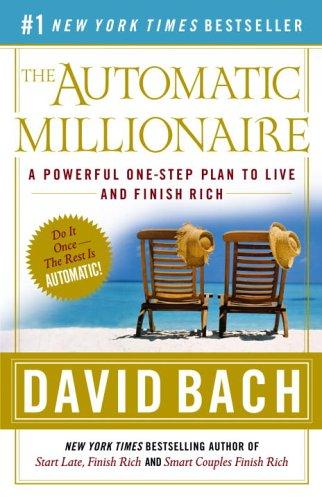
The Latte Factor was first articulated in The Automatic Millionaire (2003). The concept has been discussed for over twenty years. What does its longevity in financial discourse tell you about why it resonates, and why it also provokes resistance?
- 11.
Bach chose a parable format rather than a how-to guide. What other financial books have you read that successfully used narrative or story to teach financial principles, and what made them work?
Themes
Frequently asked questions
-
Is The Latte Factor worth reading if I've already read The Automatic Millionaire?
Probably not — the core ideas are the same, and The Automatic Millionaire is more comprehensive. The Latte Factor's value is in its brevity and parable format, which makes it useful as a gift for someone who wouldn't read a longer book, or as a quick refresher that's emotionally engaging rather than instructional.
-
What is the Latte Factor, specifically?
The idea that a small daily recurring expense — Bach's example is a specialty coffee, but it represents any mindless spending habit — redirected to investment over decades produces a substantial sum through compound interest. Five dollars a day invested at 7-8% annual returns amounts to roughly one million dollars over 40 years.
-
Is this book good for someone who knows nothing about personal finance?
As a first introduction to the emotional dimension of personal finance and the power of compounding, yes. As a practical guide to actually changing your financial situation, it is deliberately incomplete — it creates motivation but not implementation. Follow it with a more detailed guide.
-
Why has the Latte Factor been criticized?
Critics argue it misidentifies the primary driver of financial difficulty — that wages have not kept pace with costs, and that structural factors like student debt, healthcare, and housing costs matter far more than small daily spending choices. The criticism is that focusing on $5 lattes distracts from the real issues. Bach's response has been that the latte is a symbol, not the literal problem, and that the automation principle applies regardless of scale.
-
Who should read The Latte Factor?
Someone who has resisted engaging with personal finance and needs a short, story-based entry point rather than a technical guide. Or someone who wants a quick refresher on the pay-yourself-first automation principle. Or someone to whom you want to give a financial book but who won't read something long. It is not the right choice for someone who wants detailed investment or debt management guidance.