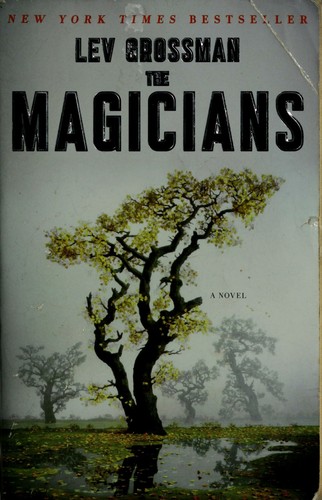
Talk to The Magicians like its author wrote you back.
Get the ideas that fit your life — not generic summaries.
- Chat with the book
- Audiobook-style main ideas
- Adapts to your life and goals
- Helps you take action
What it argues
The Magicians follows Quentin Coldwater, a brilliant and deeply unhappy teenager from Brooklyn, who discovers that Brakebills College — a secret school of magic — is real, and that the fantasy world he's been obsessed with since childhood, Fillory (a Narnia analogue), is also real. This should fix everything. It fixes nothing.
Grossman's novel is a systematic dismantling of the comfort fantasy provides. Quentin is depressed, not because his life is bad, but because depression doesn't work that way. Getting into magic school doesn't cure him. Learning actual magic, which is hard and exhausting and nothing like Harry Potter, doesn't cure him. Getting to Fillory, when it eventually happens, doesn't cure him. The book's central argument is that the things we use fantasy to escape from will follow us wherever we go, including into the fantasy.
What it gets right
- 1.
Magic school, if taken seriously, would be exhausting and technical, not charming. Brakebills works because Grossman refuses to romanticize the work of learning.
- 2.
Depression is not cured by getting what you want. Quentin's story is a sustained demonstration of this, and the novel is ruthless about it.
- 3.
Fillory as a childhood fantasy object is one of the most sophisticated treatments of what children's literature does to readers — the comfort and the prison of having loved a fictional world.
What it covers
Who wrote it
Lev Grossman was a book critic for Time magazine for many years before publishing The Magicians in 2009. The novel became a bestseller and launched a trilogy, followed by The Magician King and The Magician's Land. He is also the author of Codex, a thriller. The Magicians was adapted into a Syfy television series that ran for five seasons from 2015 to 2020, departing significantly from the novels. Grossman has written extensively about literary fiction, genre fiction, and the cultural status of fantasy.
