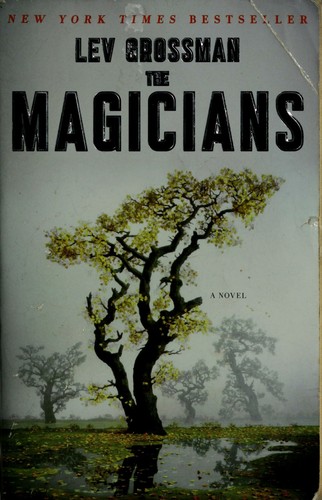
The Magicians by Lev Grossman is a 2009 fantasy book about disillusionment, depression and brilliance, wish fulfillment and its costs. Magic school, if taken seriously, would be exhausting and technical, not charming. Brakebills works because Grossman refuses to romanticize the work of learning.
Summary
The Magicians follows Quentin Coldwater, a brilliant and deeply unhappy teenager from Brooklyn, who discovers that Brakebills College — a secret school of magic — is real, and that the fantasy world he's been obsessed with since childhood, Fillory (a Narnia analogue), is also real. This should fix everything. It fixes nothing.
Grossman's novel is a systematic dismantling of the comfort fantasy provides. Quentin is depressed, not because his life is bad, but because depression doesn't work that way. Getting into magic school doesn't cure him. Learning actual magic, which is hard and exhausting and nothing like Harry Potter, doesn't cure him. Getting to Fillory, when it eventually happens, doesn't cure him. The book's central argument is that the things we use fantasy to escape from will follow us wherever we go, including into the fantasy.
The novel is deliberately written in the register of literary fiction — Grossman was a book critic at Time for years — and the Brakebills sections in particular have the texture of a campus novel. The magic system is interesting: it's not beautiful but technical, a matter of specific hand positions and mental disciplines, more like learning a foreign language than casting spells. The book takes seriously the idea that magic, if real, would require years of grinding work, and that the people who were good enough at it to get into a secret school would still be recognizably themselves: anxious, ambitious, self-destructive, human.
The Magicians is the kind of book that some readers love passionately and others find exhausting precisely because Quentin is hard to like. He is intelligent, self-aware about many things, and completely blind to others. His unhappiness is genuine but also sometimes self-indulgent, and the novel never lets him off the hook for that. Readers who find that combination compelling will likely find this one of the best fantasy novels of the decade. Readers who need protagonists to be sympathetic in conventional ways will find Quentin frustrating throughout.
Talk to The Magicians like its author wrote you back.
Get the ideas that fit your life — not generic summaries.
- Chat with the book
- Audiobook-style main ideas
- Adapts to your life and goals
- Helps you take action
Key takeaways
- 1.
Magic school, if taken seriously, would be exhausting and technical, not charming. Brakebills works because Grossman refuses to romanticize the work of learning.
- 2.
Depression is not cured by getting what you want. Quentin's story is a sustained demonstration of this, and the novel is ruthless about it.
- 3.
Fillory as a childhood fantasy object is one of the most sophisticated treatments of what children's literature does to readers — the comfort and the prison of having loved a fictional world.
- 4.
The Magicians is an adult book about what happens when the things that sustained you as a child — books, fantasy, escapism — don't scale to adult unhappiness.
- 5.
Quentin's friends are often more interesting than Quentin, particularly Alice. The ensemble is what elevates the book beyond its protagonist's limitations.
- 6.
The cost of getting to the fantasy — the actual violence and loss when Fillory is reached — is the book's most direct statement about wish fulfillment.
- 7.
Grossman's literary fiction background makes the prose significantly stronger than most fantasy. The campus-novel register in the Brakebills sections is exactly right.
- 8.
The novel is interested in what genuine boredom looks like for extraordinarily talented people. Magic doesn't resolve that. Neither does success.
Discussion questions
Use these on your own, with a book club, or as chat starters in Superbook. Book club version, ready to copy or print →
- 1.
Quentin is unhappy throughout most of the novel despite repeatedly getting things he wants. Do you find his depression convincingly rendered, or is he simply complaining?
- 2.
The Brakebills sections are modeled on literary campus fiction more than Harry Potter. Does that register work in a fantasy novel?
- 3.
Alice is in many ways the more interesting character than Quentin. Why do you think Grossman chose Quentin as the POV character?
- 4.
Fillory is a Narnia analogue, and its reality is more sinister than the books Quentin grew up with. What does the novel say about what we do to childhood beloved things when we encounter them as adults?
- 5.
Grossman argues that depression isn't fixed by circumstances changing. How much of Quentin's unhappiness is the depression itself versus his choices?
- 6.
The magic in The Magicians is hard, technical, and unglamorous. Does that approach make magic more interesting or less?
- 7.
The ending of volume one is genuinely dark. Did it feel earned, or did it feel like Grossman punishing his characters for no reason?
- 8.
Is The Magicians fundamentally a deconstruction of fantasy, or is it a fantasy novel that uses deconstruction as a tool?
- 9.
Compared to Harry Potter or Narnia — books the novel is explicitly in conversation with — what does The Magicians offer that those books can't?
- 10.
Several of the characters are shown as brilliant but self-destructive. Does the novel suggest those things are connected, or just co-occurring?
- 11.
The sexual content and adult tone were controversial when the book was published. Do you think those elements are necessary to what the novel is doing?
- 12.
By the end of volume one, do you want to follow Quentin through two more books? What keeps you going, or what makes you want to stop?
Themes
Frequently asked questions
-
Is The Magicians worth reading?
Yes, if you're prepared for a fantasy novel built around disappointment rather than wonder. It's one of the smartest treatments of what fantasy literature does to readers, and the prose is significantly better than most genre fiction. If you want comfort and excitement, this is the wrong book.
-
Is The Magicians just a cynical Harry Potter?
That framing is too simple. Grossman is in genuine conversation with Narnia as much as Potter, and the novel is interested in depression and wish fulfillment in ways that aren't cynical — they're honest. It loves fantasy but refuses to let fantasy off the hook for what it promises.
-
Who shouldn't read The Magicians?
Readers who need protagonists to be likeable, or who read fantasy primarily for escapism and comfort. The novel is actively working against that. Also readers who find campus fiction and interiority without much external plot frustrating — the Brakebills section is long and deliberate.
-
Is there a TV series?
Yes — a Syfy series ran for five seasons from 2015 to 2020. It's considerably more plot-driven and action-heavy than the novel, expands the ensemble significantly, and is a genuinely good show, though it diverges widely from the books after the first season.
-
Do I need to read the sequels?
The first book stands alone well enough. The trilogy becomes a more conventional quest fantasy in later volumes and many readers feel the first book is the strongest. If volume one resonates, the sequels reward the investment; if it doesn't, there's no need to continue.