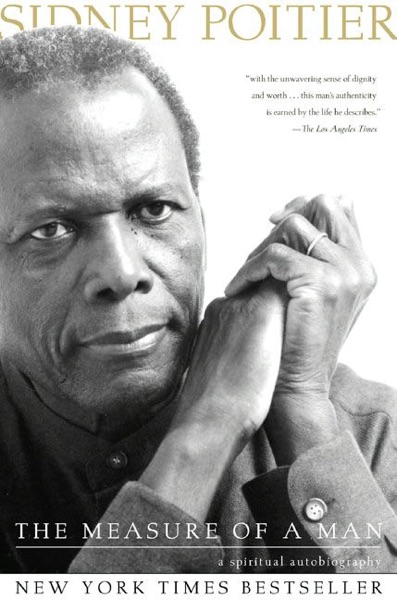
Talk to The Measure of a Man: A Spiritual Autobiography like its author wrote you back.
Get the ideas that fit your life — not generic summaries.
- Chat with the book
- Audiobook-style main ideas
- Adapts to your life and goals
- Helps you take action
The Measure of a Man: A Spiritual Autobiography, in detail
The Measure of a Man is Sidney Poitier's reflective autobiography, published when he was in his early seventies and looking back over a life that took him from bare subsistence on Cat Island in the Bahamas to the first Black actor to win the Academy Award for Best Actor. It is less a chronological account of his career than a meditation on the values — integrity, dignity, the refusal to be diminished — that he identifies as the source of whatever he built.
Poitier grew up in the Bahamas in genuine poverty, moved to Miami as a teenager, discovered racism for the first time, and arrived in New York with almost no money and nowhere to sleep. He trained at the American Negro Theatre, stumbled into film work through a series of accidents and auditions, and eventually broke through in a Hollywood that had almost no place for a Black actor who refused to play demeaning roles. The book is candid about the compromises actors face and the specific pressures that faced Black actors in the 1950s and 1960s.
What sets the memoir apart from most celebrity autobiographies is its seriousness of purpose. Poitier is genuinely trying to understand where his values came from — specifically from his father, Reginald Poitier, a Bahamian farmer whose dignity under difficulty Poitier describes as the most formative influence on his life. The chapters on his parents and childhood are the most moving in the book, more emotionally direct than the Hollywood sections.
The subtitle, A Spiritual Autobiography, signals the book's ambition. Poitier is not interested primarily in the mechanics of his career; he is interested in the question of what it means to live well and with integrity. The answers he arrives at are not original — they read like distilled common sense — but they are held with such evident conviction, and grounded in such specific experience, that the book earns the sermons it occasionally delivers.
The big ideas
- 1.
Poitier's framework for a meaningful life comes primarily from his father: a poor Bahamian farmer whose dignity under hardship shaped everything Poitier aspired to.
- 2.
Growing up in the Bahamas, where race operated differently than in the American South, gave Poitier a framework for self-regard that American racism could not fully dismantle.
- 3.
He refused demeaning roles throughout his career, at significant professional cost, because he saw each role as a statement about what Black men were permitted to be.
