Talk to The Microbiome Solution like its author wrote you back.
Get the ideas that fit your life — not generic summaries.
- Chat with the book
- Audiobook-style main ideas
- Adapts to your life and goals
- Helps you take action
The Microbiome Solution, in detail
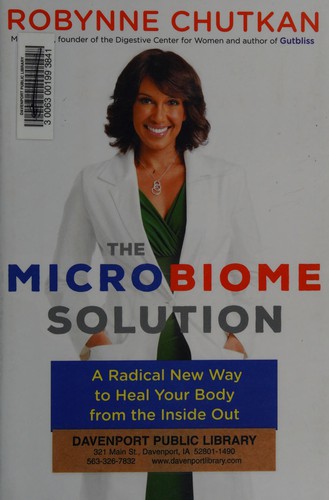
Robynne Chutkan is a gastroenterologist who founded the Digestive Center for Women in Washington DC, and The Microbiome Solution is a practitioner's-eye view of what she sees as a microbiome crisis in her patients. Where academic researchers like the Sonnenburgs approach the subject with studied hedging, Chutkan is more willing to state conclusions and make specific recommendations based on clinical experience combined with the available science.
The book's central argument is that modern life systematically destroys microbial diversity: antibiotics, acid-suppressing drugs, hyper-hygiene, processed food, and cesarean births all deplete or alter the microbial community in ways that drive the digestive disorders Chutkan sees daily — IBS, Crohn's, ulcerative colitis, SIBO — as well as systemic conditions including autoimmunity, obesity, and mental health problems. Her "live dirty, eat clean" prescription asks patients to reduce antimicrobial products in their environment, increase dietary fiber diversity, add fermented foods, and reconsider pharmaceutical interventions that affect the microbiome.
Chutkan is more directive than most in the genre. She provides specific dietary guidance, a plan called the "Microbiome Solution" with phased steps, and clinical case studies from her practice. The tone is clinical without being cold, and she is good at translating what happens in the gut into consequences patients might recognize from their own experience. She is also honest about the limits of current diagnostics: most microbiome testing sold to consumers, she argues, is not yet clinically meaningful.
The book's weakness is that it sometimes moves faster than the evidence supports. Chutkan's clinical experience is real and her reasoning is plausible, but the step from correlational microbiome research to specific dietary protocols is larger than the book always acknowledges. For readers coming from a research background, that gap will be noticeable. For patients who feel let down by conventional gastroenterology, the book offers practical starting points that most physicians have been reluctant to give.
The big ideas
- 1.
Modern life — antibiotics, processed food, over-sanitization, C-section birth, formula feeding — has depleted the microbiome of diversity it evolved over millennia to maintain.
- 2.
Many chronic conditions that conventional medicine treats as separate problems — IBS, autoimmunity, obesity, depression — share a common root in microbial disruption.
- 3.
"Live dirty, eat clean" is Chutkan's shorthand for reducing antimicrobial products in everyday life while eating a diet high in diverse plant fiber and fermented foods.
