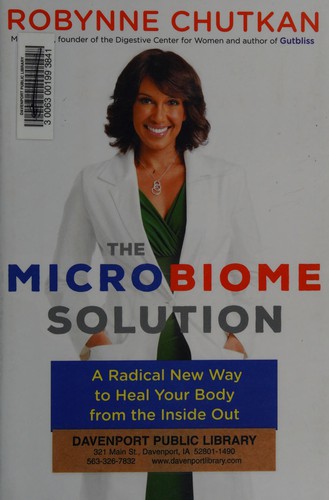
The Microbiome Solution by Robynne Chutkan is a 2015 health book about microbiome, gut health, chronic disease. Modern life — antibiotics, processed food, over-sanitization, C-section birth, formula feeding — has depleted the microbiome of diversity it evolved over millennia to maintain.
Summary
Robynne Chutkan is a gastroenterologist who founded the Digestive Center for Women in Washington DC, and The Microbiome Solution is a practitioner's-eye view of what she sees as a microbiome crisis in her patients. Where academic researchers like the Sonnenburgs approach the subject with studied hedging, Chutkan is more willing to state conclusions and make specific recommendations based on clinical experience combined with the available science.
The book's central argument is that modern life systematically destroys microbial diversity: antibiotics, acid-suppressing drugs, hyper-hygiene, processed food, and cesarean births all deplete or alter the microbial community in ways that drive the digestive disorders Chutkan sees daily — IBS, Crohn's, ulcerative colitis, SIBO — as well as systemic conditions including autoimmunity, obesity, and mental health problems. Her "live dirty, eat clean" prescription asks patients to reduce antimicrobial products in their environment, increase dietary fiber diversity, add fermented foods, and reconsider pharmaceutical interventions that affect the microbiome.
Chutkan is more directive than most in the genre. She provides specific dietary guidance, a plan called the "Microbiome Solution" with phased steps, and clinical case studies from her practice. The tone is clinical without being cold, and she is good at translating what happens in the gut into consequences patients might recognize from their own experience. She is also honest about the limits of current diagnostics: most microbiome testing sold to consumers, she argues, is not yet clinically meaningful.
The book's weakness is that it sometimes moves faster than the evidence supports. Chutkan's clinical experience is real and her reasoning is plausible, but the step from correlational microbiome research to specific dietary protocols is larger than the book always acknowledges. For readers coming from a research background, that gap will be noticeable. For patients who feel let down by conventional gastroenterology, the book offers practical starting points that most physicians have been reluctant to give.
Talk to The Microbiome Solution like its author wrote you back.
Get the ideas that fit your life — not generic summaries.
- Chat with the book
- Audiobook-style main ideas
- Adapts to your life and goals
- Helps you take action
Key takeaways
- 1.
Modern life — antibiotics, processed food, over-sanitization, C-section birth, formula feeding — has depleted the microbiome of diversity it evolved over millennia to maintain.
- 2.
Many chronic conditions that conventional medicine treats as separate problems — IBS, autoimmunity, obesity, depression — share a common root in microbial disruption.
- 3.
"Live dirty, eat clean" is Chutkan's shorthand for reducing antimicrobial products in everyday life while eating a diet high in diverse plant fiber and fermented foods.
- 4.
Acid-suppressing drugs (PPIs) and antibiotics are among the most microbiome-disruptive pharmaceuticals and are, Chutkan argues, significantly over-prescribed.
- 5.
Bacterial diversity, not just quantity, is the key marker of a healthy microbiome. A monotonous plant-based diet can still impoverish the community if it lacks variety.
- 6.
Most commercial microbiome testing available to consumers lacks the clinical validity to guide treatment decisions. The field is advancing but the tests have outrun their usefulness.
- 7.
The immune system develops in relationship with gut bacteria, particularly in early childhood. Disruptions in that window — through unnecessary antibiotics or overly sterile environments — can shift immune calibration toward allergy and autoimmunity.
- 8.
Fecal microbiota transplantation (FMT) is effective for recurrent C. difficile infection and is being studied for broader applications, but widespread therapeutic use remains premature.
Discussion questions
Use these on your own, with a book club, or as chat starters in Superbook. Book club version, ready to copy or print →
- 1.
Chutkan is more prescriptive than the academic researchers writing on the same subject. Do you find clinical experience a compelling basis for dietary recommendations, or do you want more controlled trials?
- 2.
The "live dirty, eat clean" slogan is catchy but broad. What specific changes would be most realistic in your own life?
- 3.
Chutkan argues that many drugs she sees prescribed are microbiome-disruptive. How should patients think about that risk against the immediate benefit of the drug?
- 4.
She describes microbiome testing sold to consumers as largely premature. Have you ever taken such a test? What did you make of the results?
- 5.
The book connects gut health to mental health. Does that link feel intuitive to you or does it feel like overreach?
- 6.
Chutkan is a gastroenterologist specifically treating women. Does her clinical population affect how you generalize her recommendations?
- 7.
The book was published in 2015. Which of her recommendations do you think have held up best in the decade since, based on anything you've read or heard?
- 8.
She is skeptical of most commercial probiotics. What would it take for you to be confident a specific probiotic product was actually useful?
- 9.
The "dirty" side of live dirty, eat clean — reducing sanitizing products, getting dirt exposure — is counterintuitive for many people. How did you respond to that advice?
- 10.
Chutkan uses patient case studies throughout. Did those make the book more compelling, or did they feel like cherry-picked evidence?
- 11.
Which of the chronic conditions Chutkan links to the microbiome do you think the connection is strongest for — digestive disorders, autoimmunity, obesity, or mental health?
Themes
Frequently asked questions
-
What is The Microbiome Solution about?
A gastroenterologist's guide to restoring gut health by rebuilding microbial diversity. Chutkan argues that modern life systematically depletes the microbiome and that many chronic conditions follow. Her prescription centers on reducing antimicrobials, diversifying fiber intake, and reconsidering over-prescribed medications.
-
Is The Microbiome Solution worth reading?
Yes, particularly for people dealing with chronic digestive issues who feel underserved by conventional medicine. Chutkan is more directive than purely academic microbiome books, which some readers will find helpful and others will find insufficiently cautious.
-
How long is The Microbiome Solution?
Around 300 pages, roughly four to five hours of reading. The practical sections move faster than the explanatory ones.
-
How does The Microbiome Solution compare to The Good Gut?
The Good Gut is more scientifically cautious and research-focused; The Microbiome Solution is more clinically direct and includes explicit protocols. Both cover the same core subject. Readers wanting a treatment plan will prefer Chutkan; those wanting the underlying science will prefer the Sonnenburgs.
-
What is Chutkan's main dietary recommendation?
Eat a wide variety of plant fiber, include fermented foods, reduce processed food, and minimize unnecessary antibiotic and acid-suppressor use. She emphasizes variety of plants over any single superfood or supplement.