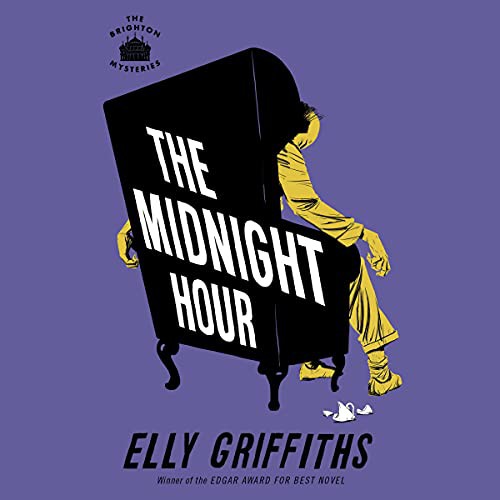
Talk to The Midnight Hour like its author wrote you back.
Get the ideas that fit your life — not generic summaries.
- Chat with the book
- Audiobook-style main ideas
- Adapts to your life and goals
- Helps you take action
What it argues
The Midnight Hour is the second book in Elly Griffiths's Brighton Mystery series, set in 1965. Emma Holmes — a former detective's assistant, now running a private investigation firm with her colleague and friend Sam Collins — is hired to investigate the death of a theatrical agent connected to a fading music-hall star named Bert Billington. Simultaneously, Detective Inspector Edgar Stephens, Emma's former boss and romantic complication, is investigating a murder that may be connected. The two investigations converge in the world of 1960s British entertainment: the old variety circuit dying, pop music arriving, television transforming everything.
This is a procedural in the classic mold — careful, methodical, built around observation and deduction rather than action. Griffiths writes in the tradition of Golden Age detective fiction while being fully aware that she is writing in that tradition, which allows the Brighton series to feel nostalgic without being uncritical. The period detail — the music halls, the boarding houses, the specific class anxieties of entertainment workers in a transitional era — is done with evident enjoyment and real research.
What it gets right
- 1.
The 1965 Brighton setting is precise and evocative — the end of variety entertainment, the beginning of the pop era, the specific geography of English seaside culture.
- 2.
Emma Holmes is a protagonist navigating the narrow professional margins available to women in 1960s Britain, and she does so without anachronistic modern consciousness.
- 3.
The novel is explicitly in dialogue with Golden Age detective fiction — Griffiths knows the tradition she's working in and uses that awareness productively.
What it covers
Who wrote it
Elly Griffiths is the pseudonym of Domenica de Rosa, a British author and former publisher. She is best known for her Ruth Galloway series of forensic mystery novels set on the Norfolk coast, which has won multiple awards and sold millions of copies worldwide. The Brighton Mysteries, of which The Midnight Hour is the second installment, began with The Zig Zag Girl in 2014. She has also published standalones including The Stranger Diaries. Her work is known for its atmospheric period detail, intelligent plotting, and central female protagonists navigating institutional constraints.
