Talk to The Millionaire Teacher like its author wrote you back.
Get the ideas that fit your life — not generic summaries.
- Chat with the book
- Audiobook-style main ideas
- Adapts to your life and goals
- Helps you take action
The Millionaire Teacher, in detail
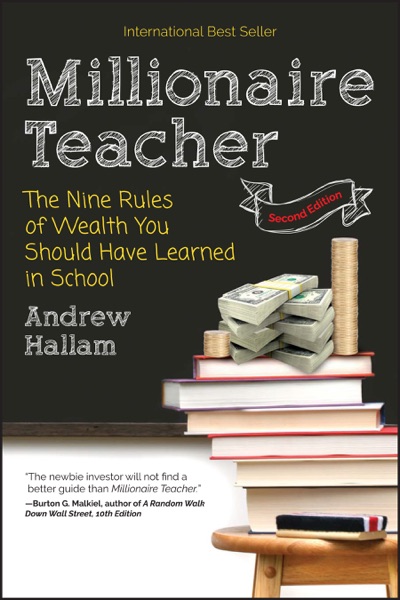
The Millionaire Teacher is Andrew Hallam's account of how he became a millionaire on a teacher's salary in his thirties by following nine rules of wealth that combine frugality, index fund investing, and psychological discipline. Hallam spent a career teaching English at a private school in Singapore, and the book was originally written for the international expat teaching community — people who earn decent but not extraordinary salaries in various countries and need guidance on investing across different financial systems.
The book's central credibility is the premise itself: Hallam actually did become a millionaire on a teacher's salary, not by finding some special strategy but by applying the same index fund principles that financial economists have advocated for decades. The demonstration effect — here is a real person with a real (ordinary) income who did this — is the book's primary contribution beyond the information it contains.
The nine rules structure the book: spend like you want to be rich (frugality), use index funds over actively managed funds, become a tax-savvy investor, fight the sales people who want to sell you expensive products, build a couch potato portfolio and rebalance annually, tune out the crap (financial media and market noise), invest as though you are in the index fund industry yourself, seek unfiltered information about investment products, and pay attention to fees in all their forms. The rules are presented with specific calculations showing how fee differences compound over a career.
The second edition was substantially updated to address the needs of international investors — expats and global citizens who invest across multiple countries. Hallam covers specific index fund providers in various markets and discusses the challenges of investing as a US citizen abroad (which has specific regulatory complications), a Canadian expat, and citizens of various other countries. This international focus distinguishes the book from US-centric personal finance guides and makes it particularly useful for the mobile professional class.
The big ideas
- 1.
Building wealth on an ordinary salary is possible and has been demonstrated. The strategy is not secret or complex: frugality, consistent saving, and low-cost index funds.
- 2.
Actively managed funds typically underperform index funds over time, net of fees. The evidence for this is strong and consistent across markets and time periods.
- 3.
Investment fees compound destructively over a career. A 1-2 percent annual fee difference produces dramatically different terminal wealth over 30-40 years.
