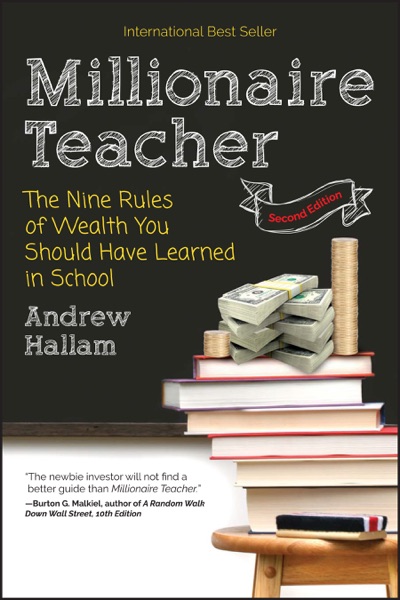
The Millionaire Teacher by Andrew Hallam is a 2011 self-help book about index investing, teacher's salary wealth, frugality. Building wealth on an ordinary salary is possible and has been demonstrated. The strategy is not secret or complex: frugality, consistent saving, and low-cost index funds.
Summary
The Millionaire Teacher is Andrew Hallam's account of how he became a millionaire on a teacher's salary in his thirties by following nine rules of wealth that combine frugality, index fund investing, and psychological discipline. Hallam spent a career teaching English at a private school in Singapore, and the book was originally written for the international expat teaching community — people who earn decent but not extraordinary salaries in various countries and need guidance on investing across different financial systems.
The book's central credibility is the premise itself: Hallam actually did become a millionaire on a teacher's salary, not by finding some special strategy but by applying the same index fund principles that financial economists have advocated for decades. The demonstration effect — here is a real person with a real (ordinary) income who did this — is the book's primary contribution beyond the information it contains.
The nine rules structure the book: spend like you want to be rich (frugality), use index funds over actively managed funds, become a tax-savvy investor, fight the sales people who want to sell you expensive products, build a couch potato portfolio and rebalance annually, tune out the crap (financial media and market noise), invest as though you are in the index fund industry yourself, seek unfiltered information about investment products, and pay attention to fees in all their forms. The rules are presented with specific calculations showing how fee differences compound over a career.
The second edition was substantially updated to address the needs of international investors — expats and global citizens who invest across multiple countries. Hallam covers specific index fund providers in various markets and discusses the challenges of investing as a US citizen abroad (which has specific regulatory complications), a Canadian expat, and citizens of various other countries. This international focus distinguishes the book from US-centric personal finance guides and makes it particularly useful for the mobile professional class.
Talk to The Millionaire Teacher like its author wrote you back.
Get the ideas that fit your life — not generic summaries.
- Chat with the book
- Audiobook-style main ideas
- Adapts to your life and goals
- Helps you take action
Key takeaways
- 1.
Building wealth on an ordinary salary is possible and has been demonstrated. The strategy is not secret or complex: frugality, consistent saving, and low-cost index funds.
- 2.
Actively managed funds typically underperform index funds over time, net of fees. The evidence for this is strong and consistent across markets and time periods.
- 3.
Investment fees compound destructively over a career. A 1-2 percent annual fee difference produces dramatically different terminal wealth over 30-40 years.
- 4.
A couch potato portfolio — a simple mix of domestic stocks, international stocks, and bonds, rebalanced annually — requires minimal maintenance and produces returns that beat most active strategies.
- 5.
Financial media creates noise that drives poor investment decisions. Market predictions and 'what to buy now' recommendations are entertainment, not guidance.
- 6.
Rebalancing — selling what has risen and buying what has fallen — is counterintuitive but mechanically enforces the buy-low-sell-high discipline that investors say they want.
- 7.
The sales incentive structure of the financial industry creates systematic pressure to sell products that are profitable for the seller rather than the buyer. Recognizing this is the first step in avoiding it.
- 8.
International investing requires attention to currency risk, local fund availability, and tax treaties. The principle of low-cost index fund investing applies globally even when the specific products differ.
Discussion questions
Use these on your own, with a book club, or as chat starters in Superbook. Book club version, ready to copy or print →
- 1.
Hallam built wealth on a teacher's salary. Does his story change how you think about what income is necessary to build meaningful wealth?
- 2.
The book frames financial salespeople as adversaries of the investor's interests. Is that framing accurate in your experience, or is it too cynical?
- 3.
The nine rules include both financial mechanics (use index funds) and psychological practices (tune out financial media). Which type of rule do you find harder to follow?
- 4.
The couch potato portfolio requires annual rebalancing — selling what performed well and buying what performed poorly. Have you ever done this, and what was it like emotionally?
- 5.
Hallam's second edition addresses expat investing specifically. Have you ever invested across different national financial systems? What complications did you encounter?
- 6.
The fee compounding calculation — showing how a 1 percent difference in annual fees produces dramatically different 30-year outcomes — is one of the most persuasive quantitative arguments in personal finance. Have you actually calculated what your investment fees cost you over your investing lifetime?
- 7.
Hallam writes for an international audience, which makes his book more accessible to non-Americans than most personal finance books. What aspects of US-centric personal finance advice don't apply to your situation?
- 8.
The teacher premise is motivational: if a teacher can do it, you can too. Does that framing actually motivate you, or does it feel like an oversimplified comparison?
- 9.
Hallam's nine rules don't require significant financial expertise. What, beyond knowledge, actually prevents most people from following them?
- 10.
The book was originally written for the Singapore expat teaching community. Does the international context reveal anything about wealth building that US-focused books miss?
- 11.
If the evidence for index fund investing over active management is this strong, why does the active management industry continue to exist and grow?
- 12.
Hallam is explicit about the time his investment journey took. What is your timeline, and does it align with what the math of your current savings rate and market returns suggests?
Themes
Frequently asked questions
-
Is The Millionaire Teacher specifically for teachers?
No. The teacher premise is used to demonstrate that the strategy works on an ordinary income, not as a limitation. The advice applies to any investor who wants a simple, evidence-based approach to building wealth on a regular salary.
-
What is the couch potato portfolio?
A simple three-fund portfolio of low-cost index funds: domestic stocks, international stocks, and bonds. The proportions depend on age and risk tolerance. You rebalance once a year by selling whatever has grown past its target weight and buying whatever has fallen below it. The 'couch potato' name reflects that it requires minimal active management.
-
How does the second edition differ from the first?
The second edition substantially expanded the international investing section, adding specific guidance for expats and global citizens investing in different financial systems, including specific fund providers in various countries. It also updated examples and product recommendations. Readers outside the United States will find the second edition significantly more useful.
-
Is this book suitable for someone with no investing experience?
Yes. Hallam explains concepts from basic principles, and the writing is accessible. The book is somewhat more technical than a book like The Psychology of Money but considerably less technical than The Four Pillars of Investing. Most readers can follow it without a financial background.
-
What is Hallam's position on cryptocurrency?
Like most evidence-based personal finance writers, Hallam treats cryptocurrency as speculative rather than investment. His index fund approach does not include cryptocurrency positions. He acknowledges its existence without recommending it as part of a wealth-building strategy.
Similar books
The Simple Path to Wealth
JL Collins
The Bogleheads' Guide to Investing
Taylor Larimore
The Little Book of Common Sense Investing
John C. Bogle
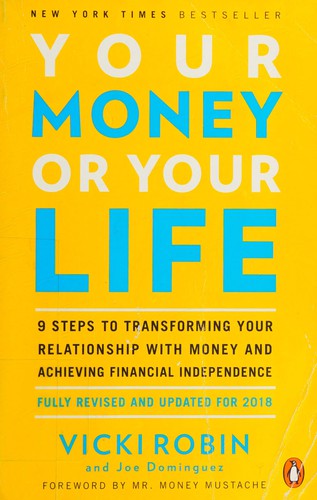
Your Money or Your Life
Vicki Robin
