Talk to The Mind of the Leader like its author wrote you back.
Get the ideas that fit your life — not generic summaries.
- Chat with the book
- Audiobook-style main ideas
- Adapts to your life and goals
- Helps you take action
The Mind of the Leader, in detail
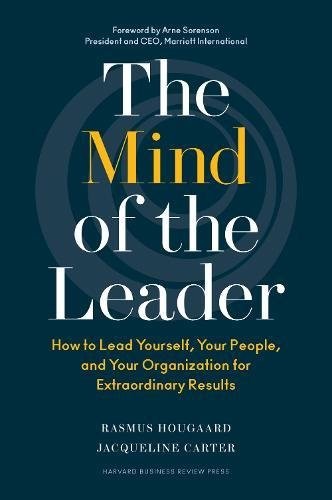
The Mind of the Leader makes a straightforward claim: the leadership crisis in most organizations is not a skills problem but a mental habits problem. Rasmus Hougaard and Jacqueline Carter, drawing on research with 35,000 leaders across dozens of companies, argue that what makes or breaks a leader is the quality of attention they bring to people and situations. Their prescription rests on three qualities: mindfulness, selflessness, and compassion.
Mindfulness here is not meditation as stress relief. The authors define it as the capacity to be fully present, aware of one's own mental states, and not hijacked by reactivity. Selflessness means leading without ego — without the status anxiety, self-promotion, and defensiveness that cause leaders to become obstacles to the people they're supposed to serve. Compassion is the willingness to care about others' welfare and act on that care, which the authors carefully distinguish from empathy (feeling others' pain) and from weakness (it co-exists with accountability and candor).
The book moves from the individual leader to teams to organizations. At the individual level, it looks at how mental habits formed under stress produce predictable failures: leaders who think they need to have all the answers, who fear showing vulnerability, or who conflate busyness with impact. At the team level, it examines psychological safety, and at the organizational level it points to companies like LinkedIn, Accenture, and SAP that have built programs around these ideas with measurable results in engagement and retention.
The research backing is real but the book's tone is earnest and sometimes repetitive. The three-pillar framework is memorable and the case studies are useful, but readers expecting a rigorous neuroscientific treatment will find it lighter than the framing suggests. It works best as a leadership self-assessment tool: leaders who read it honestly will likely identify one or two habits that need changing. Leaders who read it defensively will dismiss it as soft, which may itself be the problem the book is diagnosing.
The big ideas
- 1.
Mindfulness, selflessness, and compassion are the three mental qualities that distinguish effective leaders from merely busy ones.
- 2.
Mindfulness is not relaxation — it is the capacity to be present and non-reactive, which directly improves decision quality under pressure.
- 3.
Ego is the most common saboteur of leadership. Leaders who need to be right, visible, or in control create organizations where others stop thinking.
