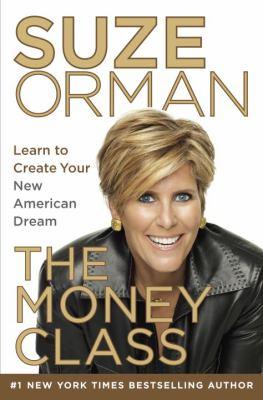
Talk to The Money Class like its author wrote you back.
Get the ideas that fit your life — not generic summaries.
- Chat with the book
- Audiobook-style main ideas
- Adapts to your life and goals
- Helps you take action
What it argues
The Money Class is Suze Orman's post-financial-crisis guide to rebuilding personal finances after a period in which many American households saw their home equity, retirement accounts, and savings simultaneously diminished. Published in 2011 as the country was emerging from the 2008 recession, it reads as both a practical remediation guide and a reassessment of financial assumptions that the crisis exposed as fragile. Orman argues that the old rules — own a home, retire at 65, expect steady appreciation — no longer apply in the same way, and that people need an updated framework for the reality they now inhabit.
The book is structured as a series of lessons organized around life's major financial challenges: family finances, home ownership, career and retirement planning, and raising money-smart children. Orman's approach is prescriptive and direct. She tells readers to keep 8-month emergency funds rather than the traditional 3-month cushion. She advises against buying homes people cannot genuinely afford, challenges the reflexive equation of homeownership with wealth building, and argues that many Americans have over-borrowed against housing in ways that have made them more financially fragile, not more secure.
What it gets right
- 1.
The financial rules that worked before 2008 — easy credit, rising home values, early retirement — no longer apply for most households.
- 2.
An 8-month emergency fund is more appropriate than the traditional 3-month recommendation given current job market volatility and recovery times.
- 3.
Homeownership is not automatically wealth-building. Buying more house than you can afford without financial stress is a risk, not an investment.
What it covers
Who wrote it
Suze Orman is one of the best-known personal finance authors and media personalities in the United States. She spent years as a financial advisor before transitioning to writing and broadcasting, hosting The Suze Orman Show on CNBC for over a decade. She has written multiple New York Times bestsellers including The 9 Steps to Financial Freedom and Women and Money. Her work targets ordinary households rather than high-net-worth investors and is known for its directness and emphasis on emotional honesty about money.
