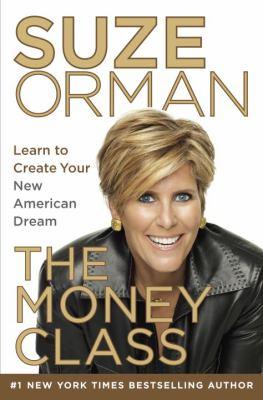
Talk to The Money Class like its author wrote you back.
Get the ideas that fit your life — not generic summaries.
- Chat with the book
- Audiobook-style main ideas
- Adapts to your life and goals
- Helps you take action
The Money Class, in detail
The Money Class is Suze Orman's post-financial-crisis guide to rebuilding personal finances after a period in which many American households saw their home equity, retirement accounts, and savings simultaneously diminished. Published in 2011 as the country was emerging from the 2008 recession, it reads as both a practical remediation guide and a reassessment of financial assumptions that the crisis exposed as fragile. Orman argues that the old rules — own a home, retire at 65, expect steady appreciation — no longer apply in the same way, and that people need an updated framework for the reality they now inhabit.
The book is structured as a series of lessons organized around life's major financial challenges: family finances, home ownership, career and retirement planning, and raising money-smart children. Orman's approach is prescriptive and direct. She tells readers to keep 8-month emergency funds rather than the traditional 3-month cushion. She advises against buying homes people cannot genuinely afford, challenges the reflexive equation of homeownership with wealth building, and argues that many Americans have over-borrowed against housing in ways that have made them more financially fragile, not more secure.
Retirement receives the most substantial treatment. Orman confronts what she calls the dream gap between what people have saved and what they will actually need, and she is blunt about the math: given longer life expectancies, lower projected market returns, and reduced Social Security certainty, many people approaching retirement need to work longer and save more than they had planned. She walks through Roth IRA versus traditional IRA decisions, Social Security timing, and the practical mechanics of rolling over 401(k) accounts.
The tone is characteristic Orman: plainspoken, occasionally stern, oriented toward helping readers make decisions they have been avoiding. The book is more useful as a motivational corrective than as a comprehensive financial planning guide, and some advice is specific to the post-2008 moment. But the emphasis on honesty about financial reality rather than comfortable projections gives it lasting relevance for readers who want a clear-eyed account of what personal financial security actually requires.
The big ideas
- 1.
The financial rules that worked before 2008 — easy credit, rising home values, early retirement — no longer apply for most households.
- 2.
An 8-month emergency fund is more appropriate than the traditional 3-month recommendation given current job market volatility and recovery times.
- 3.
Homeownership is not automatically wealth-building. Buying more house than you can afford without financial stress is a risk, not an investment.
