Talk to The Moral Landscape like its author wrote you back.
Get the ideas that fit your life — not generic summaries.
- Chat with the book
- Audiobook-style main ideas
- Adapts to your life and goals
- Helps you take action
What it argues
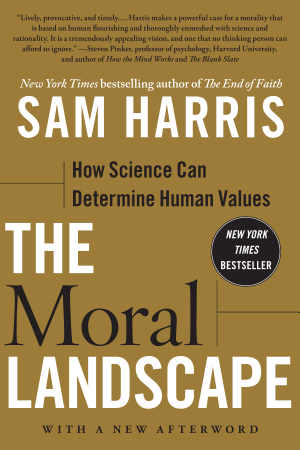
The Moral Landscape is Sam Harris's argument that science can and should determine human values. The provocative central claim is that moral questions are not fundamentally different from empirical questions: both are questions about the wellbeing of conscious creatures, and both can in principle have objectively better and worse answers. Just as medicine can say some states of health are objectively better than others, Harris argues that moral philosophy can say some states of human flourishing are objectively better than others — and that science is the tool best equipped to investigate them.
Harris's target is the widespread assumption, shared by religious conservatives and secular relativists alike, that science and morality occupy separate domains. He attacks the is-ought distinction associated with Hume, arguing that it does not actually prevent scientific investigation from bearing on moral questions once you accept that the wellbeing of conscious beings is what morality is about. He also argues against moral relativism: the claim that all cultures' moral systems are equally valid is not a liberal tolerance but an intellectual evasion that prevents clear thinking about genuine ethical catastrophes.
What it gets right
- 1.
Moral questions are questions about the wellbeing of conscious creatures, and science is the appropriate tool for investigating what actually promotes or hinders wellbeing.
- 2.
The is-ought gap does not prevent science from bearing on ethics once you accept that wellbeing matters. Refusing to accept that is not a neutral position — it's a strange one.
- 3.
Moral relativism, despite its liberal packaging, prevents clear thinking about genuine ethical failures and is ultimately indefensible.
What it covers
Who wrote it
Sam Harris is an American neuroscientist and philosopher who holds a PhD from UCLA. His books include The End of Faith, Letter to a Christian Nation, Free Will, and Waking Up, as well as The Moral Landscape. He founded the Waking Up meditation app and hosts the Making Sense podcast, where he covers philosophy, science, politics, and religion. Harris is a polarizing figure: his work is praised for clarity and intellectual courage and criticized for oversimplification and a tendency toward controversy. He is one of the most widely read secular philosophers of his generation.
