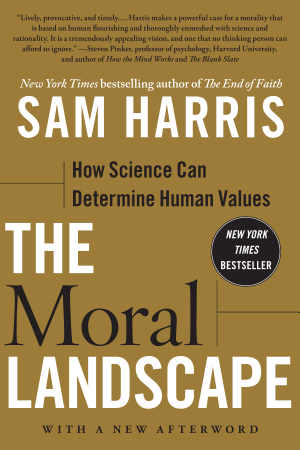
The Moral Landscape by Sam Harris is a 2010 philosophy book about ethics, science and morality, human flourishing. Moral questions are questions about the wellbeing of conscious creatures, and science is the appropriate tool for investigating what actually promotes or hinders wellbeing.
Summary
The Moral Landscape is Sam Harris's argument that science can and should determine human values. The provocative central claim is that moral questions are not fundamentally different from empirical questions: both are questions about the wellbeing of conscious creatures, and both can in principle have objectively better and worse answers. Just as medicine can say some states of health are objectively better than others, Harris argues that moral philosophy can say some states of human flourishing are objectively better than others — and that science is the tool best equipped to investigate them.
Harris's target is the widespread assumption, shared by religious conservatives and secular relativists alike, that science and morality occupy separate domains. He attacks the is-ought distinction associated with Hume, arguing that it does not actually prevent scientific investigation from bearing on moral questions once you accept that the wellbeing of conscious beings is what morality is about. He also argues against moral relativism: the claim that all cultures' moral systems are equally valid is not a liberal tolerance but an intellectual evasion that prevents clear thinking about genuine ethical catastrophes.
The second half of the book applies this framework to a series of specific cases. Harris argues that certain religious and cultural practices — female genital mutilation, honor killing, beliefs that produce chronic psychological suffering — are objectively wrong in the same way that medical neglect is objectively wrong. He acknowledges that the science of wellbeing is primitive and that the moral landscape will be difficult to map precisely, but insists that difficulty in answering a question does not mean the question has no correct answer.
The Moral Landscape generated substantial philosophical criticism. Many philosophers argued that Harris misrepresents Hume, conflates different senses of "wellbeing," and simply assumes rather than proves that wellbeing is what morality is about. Harris largely acknowledged the latter criticism as correct but immaterial: if you reject wellbeing as the foundation of ethics, he asks, what are you actually concerned about? The book is most useful as a clear attack on moral relativism and a defense of the idea that rational discourse about ethics is possible and worthwhile.
Talk to The Moral Landscape like its author wrote you back.
Get the ideas that fit your life — not generic summaries.
- Chat with the book
- Audiobook-style main ideas
- Adapts to your life and goals
- Helps you take action
Key takeaways
- 1.
Moral questions are questions about the wellbeing of conscious creatures, and science is the appropriate tool for investigating what actually promotes or hinders wellbeing.
- 2.
The is-ought gap does not prevent science from bearing on ethics once you accept that wellbeing matters. Refusing to accept that is not a neutral position — it's a strange one.
- 3.
Moral relativism, despite its liberal packaging, prevents clear thinking about genuine ethical failures and is ultimately indefensible.
- 4.
Peak and valley experiences of wellbeing define the moral landscape. There may be many peaks, but there are definitely valleys — states of suffering and degradation that are objectively bad.
- 5.
Religious moral systems fail not because they are religious but because they derive their authority from divine command rather than from evidence about what actually makes conscious lives go well.
- 6.
Expert moral intuitions, like expert intuitions in any other field, can be refined by evidence. Moral progress is real and traceable.
- 7.
Free will, Harris argues, is largely illusory in the way philosophers traditionally conceive it, but this does not undermine moral responsibility — it reframes it.
- 8.
Neuroscience will eventually reveal the brain states associated with flourishing and suffering, providing empirical grounding for moral claims.
Discussion questions
Use these on your own, with a book club, or as chat starters in Superbook. Book club version, ready to copy or print →
- 1.
Harris says wellbeing is the foundation of ethics. If someone rejects that premise, what does Harris think they are actually committed to? Do you find his challenge persuasive?
- 2.
The is-ought distinction is one of the most durable ideas in philosophy. How well does Harris engage with it, and where does his rebuttal succeed or fail?
- 3.
He argues that moral relativism is incoherent. Can you construct a version of moral relativism that survives his objections?
- 4.
What are the political implications of a world where scientists are the final authorities on moral questions? Does that worry you, and why?
- 5.
Harris claims some religious practices cause objectively measurable harm. Choose one example from the book and evaluate whether his standard of measurement is sound.
- 6.
He argues that the difficulty of mapping the moral landscape doesn't mean the landscape doesn't exist. Does that analogy hold? What would a moral fact actually look like?
- 7.
His free will argument appears here and is developed more in his later book Free Will. Does the claim that free will is illusory change how you think about praise, blame, and punishment?
- 8.
Is Harris's account of wellbeing capacious enough to include things like tragedy, sacrifice, and suffering chosen for a larger good — or does it flatten these?
- 9.
Which of Harris's specific moral claims in the book do you find most compelling? Which do you find most vulnerable to challenge?
- 10.
He writes mostly about the failures of religious morality. What would an equally rigorous application of his framework to secular moral failures look like?
- 11.
If the science of wellbeing were much more advanced than it is now, would you be comfortable letting that science settle some moral disputes currently left to democratic deliberation?
Themes
Frequently asked questions
-
What is The Moral Landscape about?
It's Harris's argument that science can determine human values because moral questions are questions about wellbeing, and wellbeing is an empirical matter. He attacks moral relativism and argues for a secular, scientific approach to ethics.
-
Is The Moral Landscape worth reading?
Worth reading if you want a clear, forceful argument for secular ethics and against moral relativism. Worth reading with a philosopher beside you, because some of Harris's philosophical moves have been persuasively challenged. The book is more a manifesto than a rigorous treatise.
-
How long does it take to read The Moral Landscape?
About five hours at average reading pace. At around 230 pages it's one of Harris's longer books but still a manageable weekend read. The notes section adds substantial substance if you follow them.
-
What do philosophers say about The Moral Landscape?
The philosophical reception was largely critical. Many argued Harris misreads Hume, assumes rather than proves that wellbeing is what morality is fundamentally about, and conflates different senses of objectivity. Harris accepts some of these criticisms in later responses but maintains the core point stands.
-
Who should read The Moral Landscape?
Anyone interested in the relationship between science and ethics, readers looking for a secular alternative to religious moral frameworks, and those who want to engage with the argument that moral relativism is intellectually untenable.
Similar books
Letter to a Christian Nation
Sam Harris
The End of Faith: Religion, Terror, and the Future of Reason
Sam Harris
Waking Up: A Guide to Spirituality Without Religion
Sam Harris
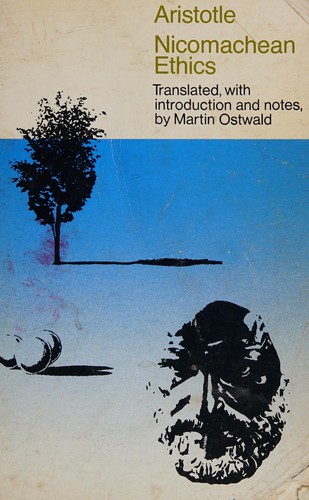
Nicomachean Ethics
Aristotle
