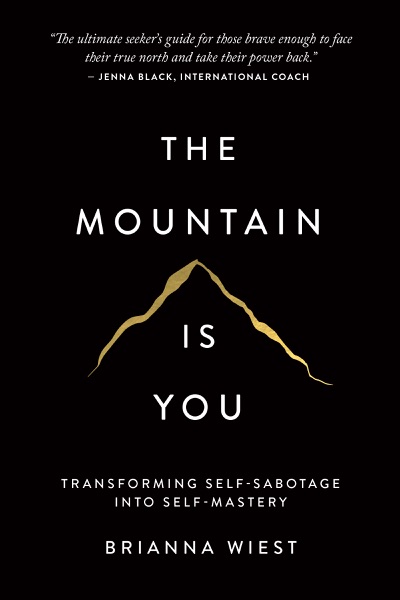
Talk to The Mountain Is You like its author wrote you back.
Get the ideas that fit your life — not generic summaries.
- Chat with the book
- Audiobook-style main ideas
- Adapts to your life and goals
- Helps you take action
What it argues
Brianna Wiest's argument in The Mountain Is You is that most people's obstacles aren't external — they are the person themselves. Self-sabotage is not irrationality; it is a rational response to competing desires and unmet needs. When someone repeatedly undermines their own progress toward something they say they want, Wiest argues, what's usually happening is that a deeper part of them is trying to protect something — safety, a familiar identity, an unconscious belief about what they deserve or what is possible. Until that deeper layer is addressed, the surface behavior won't change for long regardless of motivation or willpower.
The book's first move is to reframe self-sabotage from moral failure to diagnostic information. Rather than treating repeated self-defeating behavior as evidence that something is wrong with a person, Wiest asks what that behavior is trying to accomplish. The pattern is adaptive — it developed in response to real experiences, often in early life — and that means it can be understood and changed when the person understands what need it was meeting.
What it gets right
- 1.
Self-sabotage is not irrational. It is a response to competing desires — the part of you that wants one thing and the part that is protecting something else. Understanding what's being protected is the work.
- 2.
Most self-defeating patterns developed for a reason. They were adaptive responses to real experiences. That doesn't make them fixed, but it means they can be understood rather than just condemned.
- 3.
The gap between what you say you want and what you actually do is information. If you've repeatedly failed to pursue something you claim to want, something else is running the show.
What it covers
Who wrote it
Brianna Wiest is an American writer and author who began publishing essays on psychology, self-development, and emotional wellbeing in her early twenties, building a substantial online readership before transitioning to book publishing. Her works include 101 Essays That Will Change the Way You Think and Ceremony. The Mountain Is You, published in 2020, became a major success on social media platforms, particularly among younger readers, and has sold millions of copies. Wiest's writing is characterized by its accessibility and its focus on the emotional dimensions of self-development rather than the behavioral or tactical.
