Talk to The Muqaddimah like its author wrote you back.
Get the ideas that fit your life — not generic summaries.
- Chat with the book
- Audiobook-style main ideas
- Adapts to your life and goals
- Helps you take action
What it argues
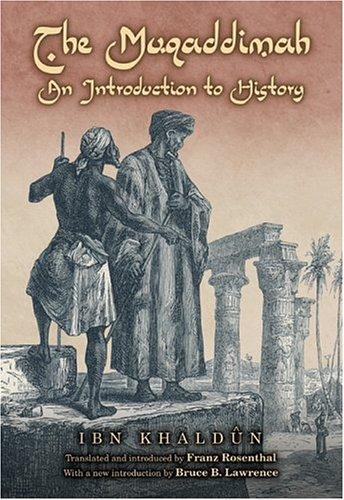
The Muqaddimah, written by the North African historian and statesman Ibn Khaldun in 1377, is the introduction to a projected universal history of the world. In practice it became something far more consequential: the first systematic attempt to identify the laws governing the rise and fall of civilizations. Written before the European Renaissance and centuries before the disciplines of sociology, economics, and political science existed as formal fields, the Muqaddimah anticipates arguments in all three.
Ibn Khaldun's central concept is asabiyya — usually translated as group feeling, social solidarity, or tribal cohesion. His argument is that political power depends on asabiyya: a ruling group holds power only as long as it maintains the shared purpose and mutual loyalty that allowed it to seize power in the first place. Dynasties follow a predictable cycle. A new group with strong asabiyya — often from the desert or the margins, uncorrupted by luxury — overthrows an existing dynasty whose solidarity has decayed into factional infighting and dependence on mercenaries. The new rulers consolidate power, build cities, patronize arts and learning, and generate wealth. Over three or four generations, that wealth and comfort erode the asabiyya that created it, and the dynasty becomes vulnerable to the next group from the margins.
What it gets right
- 1.
Asabiyya — group solidarity and shared purpose — is the engine of political power. Dynasties rise on strong asabiyya and fall as it decays through luxury and internal factional competition.
- 2.
The cycle of dynasties typically lasts three to four generations: conquest, consolidation, luxury, and decline. This is not fate but a predictable consequence of how prosperity affects solidarity.
- 3.
Excessive taxation destroys the productive base it depends on. Ibn Khaldun's analysis of declining tax revenue under high rates anticipates modern supply-side economics by six centuries.
What it covers
Who wrote it
Ibn Khaldun (1332–1406) was a North African Arab statesman, historian, and philosopher born in Tunis. He served as a diplomat, judge, and advisor to multiple sultans across North Africa, Andalusia, and Egypt, and spent a dramatic period as a negotiator with Tamerlane at the siege of Damascus in 1400. He wrote the Muqaddimah in 1377 while in seclusion in Algeria and spent subsequent decades revising and expanding it. He is considered the founder of historiography, sociology, and economics as systematic disciplines. He died in Cairo in 1406.
