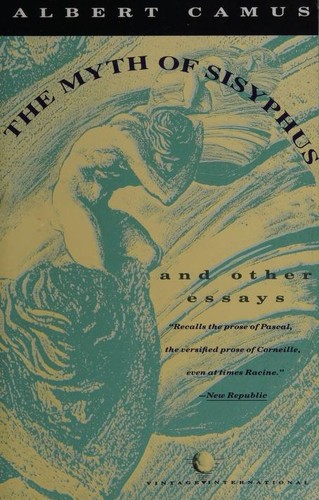
Talk to The Myth of Sisyphus like its author wrote you back.
Get the ideas that fit your life — not generic summaries.
- Chat with the book
- Audiobook-style main ideas
- Adapts to your life and goals
- Helps you take action
What it argues
The Myth of Sisyphus begins with what Camus calls the only truly serious philosophical question: why not commit suicide? If life has no inherent meaning, if human longing for clarity and purpose collides perpetually with the world's silence, why continue? Camus does not ask this provocatively. He asks it because any philosophy that takes the human condition seriously cannot avoid it. His answer — developed over roughly 120 pages — is that the right response to absurdity is neither suicide nor the "philosophical suicide" of religious faith, but revolt: the clear-eyed, defiant continuation of life in full awareness of its meaninglessness.
The absurd is defined precisely as the confrontation between the human need for meaning and the world's indifference. Neither pole alone generates absurdity — it is the collision. Camus argues that recognizing the absurd does not require resolving it. The common responses he rejects are: physical suicide (eliminating the human side of the equation) and existential or religious leaps (eliminating the tension by positing meaning through God, Kierkegaard's faith, or Husserl's essences). Both are evasions. The absurd must be maintained, lived with, not resolved.
What it gets right
- 1.
The absurd is not a property of the world or the mind alone but the confrontation between human longing for meaning and the world's perpetual silence.
- 2.
Suicide — physical or philosophical — is the wrong response to absurdity because it resolves the tension rather than living it.
- 3.
Philosophical suicide means making a 'leap' to religious faith or imposed meaning to escape absurdity — Camus considers this the same evasion as physical suicide.
What it covers
Who wrote it
Albert Camus (1913–1960) was a French-Algerian author, journalist, and philosopher who became one of the most prominent voices of 20th-century humanism. Born in poverty in colonial Algeria, he studied philosophy, wrote for the resistance during the Nazi occupation, and edited the newspaper Combat. His novels The Stranger and The Plague, his plays, and his essays made him a central figure in postwar French intellectual life. He received the Nobel Prize in Literature in 1957, one of the youngest recipients in the prize's history. He died in a car accident at 46.
