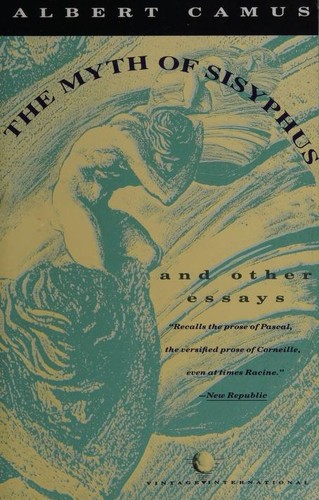
The Myth of Sisyphus by Albert Camus is a 1942 philosophy book about absurdity, meaning, suicide. The absurd is not a property of the world or the mind alone but the confrontation between human longing for meaning and the world's perpetual silence.
Summary
The Myth of Sisyphus begins with what Camus calls the only truly serious philosophical question: why not commit suicide? If life has no inherent meaning, if human longing for clarity and purpose collides perpetually with the world's silence, why continue? Camus does not ask this provocatively. He asks it because any philosophy that takes the human condition seriously cannot avoid it. His answer — developed over roughly 120 pages — is that the right response to absurdity is neither suicide nor the "philosophical suicide" of religious faith, but revolt: the clear-eyed, defiant continuation of life in full awareness of its meaninglessness.
The absurd is defined precisely as the confrontation between the human need for meaning and the world's indifference. Neither pole alone generates absurdity — it is the collision. Camus argues that recognizing the absurd does not require resolving it. The common responses he rejects are: physical suicide (eliminating the human side of the equation) and existential or religious leaps (eliminating the tension by positing meaning through God, Kierkegaard's faith, or Husserl's essences). Both are evasions. The absurd must be maintained, lived with, not resolved.
The long central essay examines four "absurd men" — Don Juan, the conqueror, the actor, and the creator — each of whom embodies the quantity-over-quality ethic Camus recommends: living as much as possible, not as well as possible, in full awareness of the limits. The creator occupies the most sustained attention: the absurd artist makes works knowing they have no transcendent significance, and that awareness is part of the work.
The closing essay on Sisyphus, condemned by the gods to roll his boulder up the hill and watch it fall forever, is one of the most celebrated passages in 20th-century philosophy. Camus imagines Sisyphus happy — not because his condition has changed but because he owns it. The rock is his. The struggle itself toward the heights is enough to fill a human heart. This is not optimism or resignation but something harder: rebellion that asks nothing in return.
Talk to The Myth of Sisyphus like its author wrote you back.
Get the ideas that fit your life — not generic summaries.
- Chat with the book
- Audiobook-style main ideas
- Adapts to your life and goals
- Helps you take action
Key takeaways
- 1.
The absurd is not a property of the world or the mind alone but the confrontation between human longing for meaning and the world's perpetual silence.
- 2.
Suicide — physical or philosophical — is the wrong response to absurdity because it resolves the tension rather than living it.
- 3.
Philosophical suicide means making a 'leap' to religious faith or imposed meaning to escape absurdity — Camus considers this the same evasion as physical suicide.
- 4.
The only authentic response is revolt: clear-eyed, defiant continuation of life in full awareness of its lack of transcendent meaning.
- 5.
Absurd living means maximizing quantity of experience rather than seeking quality or purpose — breadth over depth, intensity over significance.
- 6.
The absurd creator makes work knowing it has no transcendent value; the absurdity is part of the creation, not an obstacle to it.
- 7.
Sisyphus is happy because he has made his rock his own — the struggle itself, fully owned and fully conscious, is sufficient.
- 8.
Freedom under absurdism is not freedom to achieve anything but freedom from illusion: the liberty of someone who no longer needs the world to give them reasons.
Discussion questions
Use these on your own, with a book club, or as chat starters in Superbook. Book club version, ready to copy or print →
- 1.
Camus opens with the claim that suicide is the only serious philosophical question. Do you find that framing genuinely provocative, or does it seem like deliberate provocation for its own sake?
- 2.
Have you ever experienced something that felt like the absurd — the collision between your need for meaning and the world's indifference? What was the context?
- 3.
Camus distinguishes physical suicide from philosophical suicide. Which is more common in your experience of how people respond to meaninglessness?
- 4.
He argues that religious faith is a form of 'philosophical suicide.' Is that a fair characterization of faith, or does it miss something important about what faith actually is?
- 5.
The four absurd men — Don Juan, the conqueror, the actor, the creator — each pursue quantity over quality. Which of them feels most like a genuine model for living?
- 6.
Camus says we must imagine Sisyphus happy. Is that a genuine insight or a forced resolution — a literary trick that doesn't survive contact with actual suffering?
- 7.
What is the difference between revolt as Camus defines it and simple resignation or stoic acceptance?
- 8.
If meaning is not inherent but created through engagement, does the quality of what you engage with matter? Or is all engagement equal under absurdism?
- 9.
Camus wrote this essay during the Nazi occupation of France, under conditions of real political absurdity. Does knowing that change how you read the philosophical argument?
- 10.
The essay ends with a claim about happiness that many readers find either inspiring or hollow. What determines which it is for a given reader?
- 11.
Absurdism, existentialism, and nihilism are often confused. How would you explain the difference between all three to someone who hadn't read any of them?
Themes
Frequently asked questions
-
What is the main argument of The Myth of Sisyphus?
That the collision between human longing for meaning and the world's indifference constitutes the absurd, and that the right response is neither suicide nor a religious leap of faith but revolt — clear-eyed, defiant continuation of life in full awareness of its meaninglessness.
-
Is The Myth of Sisyphus depressing?
Counterintuitively, no — or at least it is not intended to be. Camus argues that fully acknowledging absurdity is more liberating than evading it, and the final image of Sisyphus happy is meant as a kind of triumph. Whether that lands depends on the reader.
-
How is Camus different from Sartre?
Camus rejected the existentialist label. He was less focused on radical freedom and individual authenticity and more on the shared human condition and solidarity. He also had a warmer relationship to the physical world and Mediterranean culture than the Paris-centered existentialists.
-
Who should read The Myth of Sisyphus?
Anyone dealing seriously with questions of meaning, purpose, and how to live without transcendent guarantees. It is short, clear, and beautifully written compared to most philosophy. It reads quickly and rewards rereading at different life stages.
-
What does 'one must imagine Sisyphus happy' mean?
Sisyphus is condemned to pointless, eternal labor. Camus argues that by making his struggle fully his own — by owning his fate rather than fleeing it — Sisyphus becomes master of his condition. Happiness here is not cheerfulness but a profound self-possession in the face of meaninglessness.