Talk to The Now Habit like its author wrote you back.
Get the ideas that fit your life — not generic summaries.
- Chat with the book
- Audiobook-style main ideas
- Adapts to your life and goals
- Helps you take action
The Now Habit, in detail
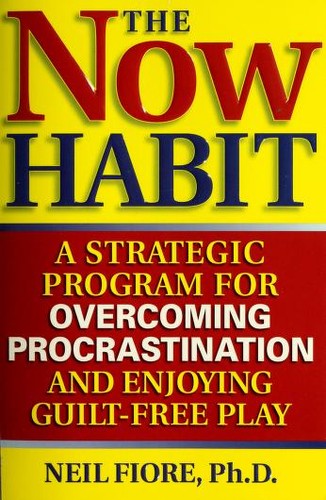
The Now Habit is psychologist Neil Fiore's reframe of procrastination as a coping mechanism rather than a character flaw. Published in 1988 and updated periodically since, it remains one of the most psychologically grounded books on the topic. Fiore's argument is that procrastination is a symptom of perfectionism, fear of failure, and the misalignment between how we tell ourselves we "should" be spending time and how we actually spend it — and that addressing these underlying causes is more effective than willpower and guilt.
The book introduces the Unschedule: a weekly planner that starts by filling in leisure, social activities, and self-care before any work time. The Unschedule is counterintuitive — it looks like giving up on discipline — but Fiore argues that the guilt cycle (I should be working; I'm not working; I feel guilty; I seek relief from guilt through more avoidance) is what makes procrastination self-reinforcing. By scheduling guilt-free leisure first, you eliminate the guilt that drives the avoidance.
Fiore also addresses the language of procrastination: replacing "I have to" with "I choose to," "I should finish" with "I can start," and "this project" with "this task" — small linguistic changes that reduce the sense of overwhelming obligation and return agency to the procrastinator. The distinction between big, undefined projects (which trigger avoidance) and small, specific tasks (which are startable) is central to his approach.
The book was written before smartphones and social media, which means its treatment of distraction is dated. But the psychological mechanics of procrastination it describes — fear of failure, perfectionism, overwhelm from undefined work — have not changed. It is one of the more clinically sound books in the genre.
The big ideas
- 1.
Procrastination is not laziness or poor time management. It is a coping strategy for managing anxiety about performance, criticism, and the possibility of failure.
- 2.
The Unschedule reverses conventional time management: fill in leisure, social activities, and self-care first, then let work fill the remaining time. This breaks the guilt cycle that reinforces procrastination.
- 3.
Guilt-free play is not a reward for finishing — it is a prerequisite for sustained work. People who plan no leisure never feel they've earned it and work in a chronic state of resentment.
