Talk to The Number like its author wrote you back.
Get the ideas that fit your life — not generic summaries.
- Chat with the book
- Audiobook-style main ideas
- Adapts to your life and goals
- Helps you take action
What it argues
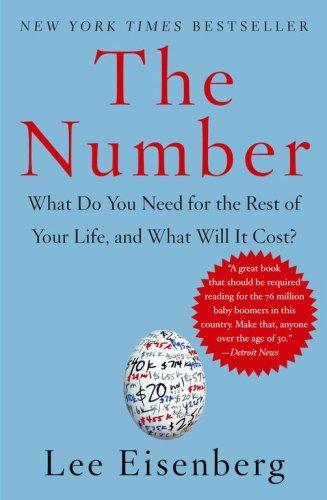
The Number is Lee Eisenberg's exploration of the question that haunts many Americans in midlife: how much money do I actually need to retire? Eisenberg, former editor-in-chief of Esquire, came to the subject personally, finding himself in his fifties unsure whether his savings were anywhere near adequate and equally unsure what he was saving for. The result is a book that weaves financial reporting with cultural and psychological inquiry into why the question of the number is so hard to answer honestly.
Eisenberg is direct that the number is not just a financial calculation. It's a proxy for questions about identity, status, purpose, and what a good life looks like. He interviews financial planners, retirees, academics, and therapists, and finds that most people either avoid thinking about the number entirely or fixate on a figure that reflects anxiety rather than analysis. The book documents a culture of retirement planning that is simultaneously over-engineered by the financial services industry and radically underexamined by the people it's supposed to serve.
What it gets right
- 1.
The number — the amount of money needed to retire — is not primarily a financial question. It encodes assumptions about identity, purpose, and what daily life should look like that most people have never made explicit.
- 2.
Most Americans either avoid thinking about the number entirely or anchor to a round figure with no real analysis behind it. The financial services industry profits from both behaviors.
- 3.
Retirement planning requires deciding what you're retiring to, not just from. People who enter retirement with a clear daily purpose report dramatically higher satisfaction than those who assume contentment will follow financial security.
What it covers
Who wrote it
Lee Eisenberg is a writer and former editor-in-chief of Esquire magazine, where he worked for more than two decades. He has also held senior editorial roles at Time Inc. and written for a range of publications. The Number, published in 2006, drew on his personal experience approaching retirement and his background as a cultural journalist. His work bridges personal finance and cultural commentary in a voice accessible to general readers rather than financial specialists.
