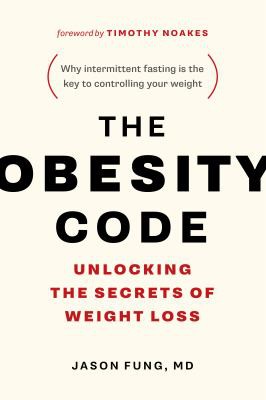
Talk to The Obesity Code like its author wrote you back.
Get the ideas that fit your life — not generic summaries.
- Chat with the book
- Audiobook-style main ideas
- Adapts to your life and goals
- Helps you take action
The Obesity Code, in detail
The Obesity Code is Jason Fung's argument that obesity is a hormonal disease, not a behavioral one, and that the treatment follows from that understanding. Fung is a Canadian nephrologist who treats kidney disease — often downstream of obesity and diabetes — and he came to dietary intervention through watching his patients' conditions worsen despite conventional medical advice. His central claim is that insulin is the master regulator of fat storage, and that chronically elevated insulin is the root cause of weight gain that resists conventional calorie restriction.
The book begins by dismantling the calorie balance model. Fung argues that treating obesity as simple energy imbalance — eat less, exercise more — misunderstands how the body regulates weight. When calories are restricted, the body reduces its metabolic rate to compensate; when more energy is burned, hunger increases to compensate. The result is that calorie restriction produces temporary weight loss followed by rebound, a pattern well-documented in the research literature and in the lived experience of most people who have dieted.
Insulin, Fung argues, is why this happens. When insulin is elevated — by frequent eating, refined carbohydrates, and sugar — the body is in storage mode: energy flows into fat cells. When insulin is low — during fasting, or on a low-carbohydrate diet — energy flows out of fat cells. The treatment is therefore not less food overall but foods and eating patterns that lower insulin: fewer carbohydrates, particularly refined ones, and less frequent eating, including periods of fasting.
The book's most distinctive contribution is its advocacy for intermittent fasting. Fung argues that fasting — going without food for extended periods, from sixteen hours to several days — is the most powerful way to lower insulin and trigger fat loss. He reviews the relevant research and addresses common objections, particularly the concern that fasting causes muscle loss, which the evidence does not strongly support. The practical prescriptions are clear: reduce sugar and refined carbohydrates, eat whole foods, and incorporate fasting windows into your schedule. Fung's framework is controversial in mainstream medicine but has had significant influence on popular practice.
The big ideas
- 1.
Obesity is a hormonal disease, not a caloric disease: chronically elevated insulin drives fat storage regardless of how many calories are consumed.
- 2.
Calorie restriction fails long-term because the body compensates by reducing metabolic rate and increasing hunger — the set-point defended by hormonal regulation cannot be overcome by willpower alone.
- 3.
Insulin is elevated by refined carbohydrates, sugar, frequent eating, and processed foods; it is reduced by low-carbohydrate eating, whole foods, and fasting.
