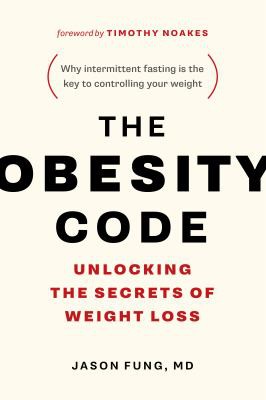
The Obesity Code by Jason Fung is a 2016 health book about obesity, insulin, intermittent fasting. Obesity is a hormonal disease, not a caloric disease: chronically elevated insulin drives fat storage regardless of how many calories are consumed.
Summary
The Obesity Code is Jason Fung's argument that obesity is a hormonal disease, not a behavioral one, and that the treatment follows from that understanding. Fung is a Canadian nephrologist who treats kidney disease — often downstream of obesity and diabetes — and he came to dietary intervention through watching his patients' conditions worsen despite conventional medical advice. His central claim is that insulin is the master regulator of fat storage, and that chronically elevated insulin is the root cause of weight gain that resists conventional calorie restriction.
The book begins by dismantling the calorie balance model. Fung argues that treating obesity as simple energy imbalance — eat less, exercise more — misunderstands how the body regulates weight. When calories are restricted, the body reduces its metabolic rate to compensate; when more energy is burned, hunger increases to compensate. The result is that calorie restriction produces temporary weight loss followed by rebound, a pattern well-documented in the research literature and in the lived experience of most people who have dieted.
Insulin, Fung argues, is why this happens. When insulin is elevated — by frequent eating, refined carbohydrates, and sugar — the body is in storage mode: energy flows into fat cells. When insulin is low — during fasting, or on a low-carbohydrate diet — energy flows out of fat cells. The treatment is therefore not less food overall but foods and eating patterns that lower insulin: fewer carbohydrates, particularly refined ones, and less frequent eating, including periods of fasting.
The book's most distinctive contribution is its advocacy for intermittent fasting. Fung argues that fasting — going without food for extended periods, from sixteen hours to several days — is the most powerful way to lower insulin and trigger fat loss. He reviews the relevant research and addresses common objections, particularly the concern that fasting causes muscle loss, which the evidence does not strongly support. The practical prescriptions are clear: reduce sugar and refined carbohydrates, eat whole foods, and incorporate fasting windows into your schedule. Fung's framework is controversial in mainstream medicine but has had significant influence on popular practice.
Talk to The Obesity Code like its author wrote you back.
Get the ideas that fit your life — not generic summaries.
- Chat with the book
- Audiobook-style main ideas
- Adapts to your life and goals
- Helps you take action
Key takeaways
- 1.
Obesity is a hormonal disease, not a caloric disease: chronically elevated insulin drives fat storage regardless of how many calories are consumed.
- 2.
Calorie restriction fails long-term because the body compensates by reducing metabolic rate and increasing hunger — the set-point defended by hormonal regulation cannot be overcome by willpower alone.
- 3.
Insulin is elevated by refined carbohydrates, sugar, frequent eating, and processed foods; it is reduced by low-carbohydrate eating, whole foods, and fasting.
- 4.
Intermittent fasting — periods ranging from overnight to multiple days — is the most effective tool for lowering baseline insulin and enabling fat release.
- 5.
Fasting does not cause muscle loss in healthy people; growth hormone and catecholamines released during fasting protect lean mass while fat is mobilized.
- 6.
The two key dietary levers for weight control are reducing insulin-spiking foods (sugar, refined grains) and reducing meal frequency through structured fasting.
- 7.
Insulin resistance — the state in which cells respond poorly to insulin — requires progressively higher insulin levels to achieve the same effect, creating a vicious cycle of weight gain and metabolic dysfunction.
- 8.
Type 2 diabetes is a disease of too much insulin-driven sugar storage, not a disease of insufficient insulin — the conventional treatment of adding more insulin can worsen its root cause.
Discussion questions
Use these on your own, with a book club, or as chat starters in Superbook. Book club version, ready to copy or print →
- 1.
Fung argues that obesity is hormonal, not behavioral. How does that reframe how you think about personal responsibility for weight?
- 2.
Most people who have dieted understand the rebound effect Fung describes. Does his hormonal explanation for why diets fail match your experience or that of people you know?
- 3.
Intermittent fasting is the book's most practical recommendation. Have you tried any form of fasting? What was the experience, and does Fung's framework change how you interpret it?
- 4.
He argues that frequent eating, even of healthy food, elevates insulin throughout the day. Does the idea of fewer meals feel manageable or impractical given your life?
- 5.
Fung is a kidney doctor, not an obesity researcher. Does his clinical vantage point strengthen or complicate his argument for you?
- 6.
The book argues that type 2 diabetes is routinely treated with medications that address the symptom (high blood sugar) while worsening the root cause (high insulin). Is that a convincing critique of standard care?
- 7.
He contrasts processed food, which spikes insulin sharply, with whole food, which produces a slower response. How much does the processing state of food factor into your current eating?
- 8.
Fung's model predicts that reducing carbohydrate quality matters more than reducing total food intake. Does that square with public health advice you've received?
- 9.
The book covers the social and environmental determinants of obesity — why poor neighborhoods have higher rates. Does his framework adequately account for those structural factors?
- 10.
If fasting is as effective as Fung claims, why isn't it standard medical practice? What institutional or commercial barriers might explain that?
- 11.
He argues that three large meals are better for insulin regulation than six small meals. How does that contradict advice you've received, and who do you believe?
- 12.
What single change from the book would be most feasible for you? What would be the hardest?
Themes
Frequently asked questions
-
Is The Obesity Code worth reading?
Yes, particularly if you have struggled with weight loss through conventional calorie restriction and want a mechanistic explanation for why it fails. Fung is a clear writer and the hormonal framework is genuinely useful for thinking about diet and metabolism. Some claims are stronger than others — the most practical takeaways (reduce sugar, reduce meal frequency) have broader scientific support than some of the more ambitious claims about fasting.
-
What does The Obesity Code say about intermittent fasting?
That it is the most effective dietary intervention for lowering baseline insulin levels, enabling the body to access stored fat. Fung covers multiple fasting approaches, from 16:8 daily windows to multi-day fasts, and argues that the duration of fasting matters more than the specific foods eaten during feeding windows.
-
Does The Obesity Code recommend a specific diet?
Not a named diet, but it recommends removing sugar and refined carbohydrates, eating whole foods, reducing meal frequency, and incorporating fasting. It is consistent with low-carbohydrate approaches but less prescriptive about protein and fat composition than some ketogenic diet books.
-
Is the hormonal theory of obesity accepted by mainstream medicine?
The role of insulin in fat metabolism is well-established; the specific claim that chronically elevated insulin is the primary driver of obesity — rather than caloric excess — is more controversial. The debate is active. Most mainstream obesity researchers accept that insulin matters but disagree with how central Fung makes it.
-
Who should read The Obesity Code?
Anyone who has struggled to lose weight through conventional methods and wants a different framework. Also useful for people with insulin resistance, metabolic syndrome, or type 2 diabetes who want to understand the dietary levers available to them. Less useful if you are looking for calorie-counting guidance or a specific meal plan.