Talk to The Painted Word like its author wrote you back.
Get the ideas that fit your life — not generic summaries.
- Chat with the book
- Audiobook-style main ideas
- Adapts to your life and goals
- Helps you take action
What it argues
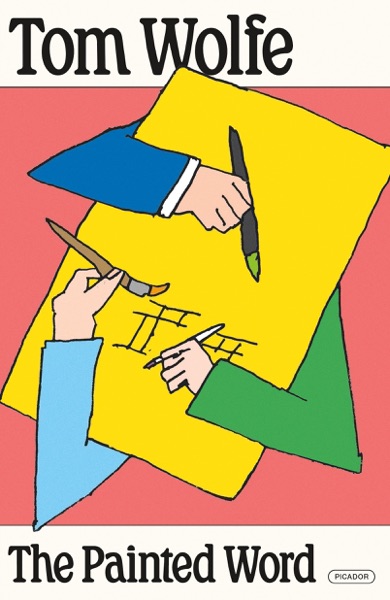
The Painted Word began as a provocation and became a minor classic. Tom Wolfe's argument, launched in 1975, is that twentieth-century American fine art — Abstract Expressionism, Pop Art, and the movements that followed — had become entirely dependent on a priestly class of critics to explain it. Without the accompanying text, the theory, the manifesto, Wolfe argues, the paintings are inert. The art world had inverted the traditional relationship: instead of theory following art, art was being produced to illustrate theory.
Wolfe traces what he calls the "boho dance," the cultural ritual by which artists in New York performed poverty and rebellion while remaining entirely beholden to the approval of three or four critics — chiefly Clement Greenberg and Harold Rosenberg — who could anoint or destroy a career with a paragraph. The Abstract Expressionists needed Greenberg to explain what their canvases meant. The audience, unable to look at a Rothko or a de Kooning and see anything without instruction, took their cues from the theorists. The painting had become the painted word.
What it gets right
- 1.
Wolfe's core claim is that twentieth-century American avant-garde art had become theory-driven: paintings were produced to illustrate critical ideas rather than the other way around.
- 2.
A tiny number of New York critics — chiefly Clement Greenberg and Harold Rosenberg — held near-absolute power over which artists succeeded. Career trajectories depended on their approval.
- 3.
The 'boho dance' describes how artists perform bohemian rebellion while remaining structurally dependent on the art establishment they affect to oppose.
What it covers
Who wrote it
Tom Wolfe (1930–2018) was an American journalist, novelist, and cultural critic who pioneered New Journalism alongside Hunter S. Thompson and Joan Didion. His nonfiction includes The Electric Kool-Aid Acid Test, The Right Stuff, and Radical Chic. His novels The Bonfire of the Vanities and A Man in Full were major commercial and critical events. Wolfe was known for his white suit, his combative satirical voice, and his willingness to attack institutions — literary, artistic, and academic — that he thought had become self-serving. The Painted Word and its companion essay From Bauhaus to Our House apply his satirical method to the visual arts.
