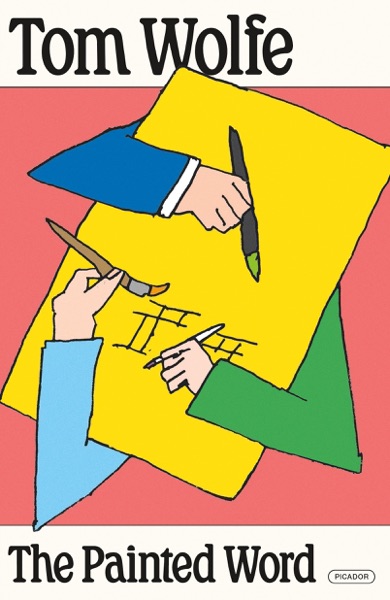
The Painted Word by Tom Wolfe is a 1975 philosophy book about art criticism, modern art, cultural gatekeeping. Wolfe's core claim is that twentieth-century American avant-garde art had become theory-driven: paintings were produced to illustrate critical ideas rather than the other way around.
Summary
The Painted Word began as a provocation and became a minor classic. Tom Wolfe's argument, launched in 1975, is that twentieth-century American fine art — Abstract Expressionism, Pop Art, and the movements that followed — had become entirely dependent on a priestly class of critics to explain it. Without the accompanying text, the theory, the manifesto, Wolfe argues, the paintings are inert. The art world had inverted the traditional relationship: instead of theory following art, art was being produced to illustrate theory.
Wolfe traces what he calls the "boho dance," the cultural ritual by which artists in New York performed poverty and rebellion while remaining entirely beholden to the approval of three or four critics — chiefly Clement Greenberg and Harold Rosenberg — who could anoint or destroy a career with a paragraph. The Abstract Expressionists needed Greenberg to explain what their canvases meant. The audience, unable to look at a Rothko or a de Kooning and see anything without instruction, took their cues from the theorists. The painting had become the painted word.
The satirical set pieces are sharp. Wolfe reconstructs the atmosphere of New York art world gatherings, the anxious deference to critical opinion, and the way each new avant-garde movement required an ever more elaborate theoretical apparatus to distinguish itself from what came before. Minimalism needed more theory than Abstract Expressionism; Conceptual Art more still — culminating in work where the idea replaced the object entirely, the logical endpoint of the trajectory Wolfe is skewering.
As a piece of argument the book has real weaknesses: Wolfe dismisses rather than engages, and the satirical voice crowds out the analysis. He never fully accounts for why critics became so dominant, or whether the situation he describes was unique to a particular moment rather than constitutive of modern art as such. But as a provocation it works. The book forces you to ask a genuine question: what exactly is the relationship between the art object and the discourse around it, and who gets to decide?
Talk to The Painted Word like its author wrote you back.
Get the ideas that fit your life — not generic summaries.
- Chat with the book
- Audiobook-style main ideas
- Adapts to your life and goals
- Helps you take action
Key takeaways
- 1.
Wolfe's core claim is that twentieth-century American avant-garde art had become theory-driven: paintings were produced to illustrate critical ideas rather than the other way around.
- 2.
A tiny number of New York critics — chiefly Clement Greenberg and Harold Rosenberg — held near-absolute power over which artists succeeded. Career trajectories depended on their approval.
- 3.
The 'boho dance' describes how artists perform bohemian rebellion while remaining structurally dependent on the art establishment they affect to oppose.
- 4.
Each successive avant-garde movement required more elaborate theoretical justification to distinguish itself from its predecessor, a dynamic that eventually produced Conceptual Art — where the idea became the work.
- 5.
Wolfe argues the audience was trained to need theoretical scaffolding before they could perceive value in a work. The painting without its explanatory text was just paint.
- 6.
The book is a satirical polemic, not a balanced analysis. Its power lies in identifying a real phenomenon — critical gatekeeping — even if the framing is reductive.
- 7.
The questions the book raises about the relationship between art, theory, and institutional authority remain live questions in contemporary art discourse.
Discussion questions
Use these on your own, with a book club, or as chat starters in Superbook. Book club version, ready to copy or print →
- 1.
Wolfe argues art became illustration for theory. Does that description match any contemporary art you've encountered?
- 2.
Who plays the role of Clement Greenberg in contemporary art, design, or other creative fields you're familiar with?
- 3.
Is there art you've found more interesting after reading critical analysis of it, or less? What does that suggest about the relationship Wolfe is describing?
- 4.
The 'boho dance' — performing rebellion while needing establishment approval — seems to appear in many fields. Where else do you see it?
- 5.
Wolfe is dismissive of Abstract Expressionism and what followed. Does the satirical tone strengthen or weaken his argument for you?
- 6.
How much of your own aesthetic judgment is formed independently, and how much is shaped by trusted intermediaries — critics, friends, algorithms?
- 7.
If the art world really was captured by three critics in mid-century New York, what structural features allowed that to happen? Could it happen in the same way today?
- 8.
Conceptual Art sometimes produces work where the idea entirely replaces the object. Does that represent the collapse Wolfe predicts, or something else?
- 9.
Is there a difference between 'art that requires explanation' and 'art that rewards explanation'? Does Wolfe's argument collapse that distinction too quickly?
- 10.
What is the book's own relationship to the dynamic it describes? Is Wolfe's critique itself a form of theory asserting dominance over objects?
- 11.
What would it mean to look at a painting without any prior knowledge of its context, movement, or critical reception? Is that even possible?
Themes
Frequently asked questions
-
What is The Painted Word about?
It's a short polemical essay arguing that mid-twentieth-century American fine art had become entirely dependent on critical theory for its meaning. Wolfe contends that the paintings were produced to illustrate ideas, rather than the ideas arising from the work — and that a tiny critical establishment in New York controlled what counted as legitimate art.
-
Is The Painted Word worth reading?
Yes, as a provocation rather than a balanced account. The argument is deliberately overstated and the satirical voice crowds out nuance, but it asks a genuinely important question about the relationship between art and the discourse surrounding it. It's short enough to read in an afternoon and rewarding to argue with.
-
How long is The Painted Word?
About 110 pages in the original edition — roughly two hours of reading. It reads more like an extended essay than a conventional book.
-
Who should read The Painted Word?
Anyone interested in how critical gatekeeping works in creative fields, or curious about the mid-century New York art world. It's also useful for designers, architects, and anyone who has sat in a room while someone explained why a work they didn't understand was important.
-
Is Wolfe's argument in The Painted Word correct?
Partially. He identifies something real about the dependence of the avant-garde on critical institutions, but the satire overreaches. The claim that the art is meaningless without theory ignores the lived experience of people who do respond directly to the works he dismisses. The book is better read as a question than an answer.
Similar books
Steal Like an Artist
Austin Kleon
The War of Art
Steven Pressfield
The Creative Habit
Twyla Tharp
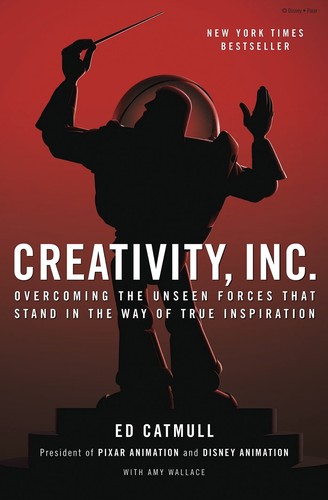
Creativity, Inc.: Overcoming the Unseen Forces That Stand in the Way of True Inspiration
Ed Catmull and Amy Wallace
