Talk to The Passenger like its author wrote you back.
Get the ideas that fit your life — not generic summaries.
- Chat with the book
- Audiobook-style main ideas
- Adapts to your life and goals
- Helps you take action
The Passenger, in detail
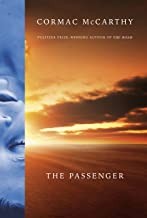
The Passenger is the first of two late novels Cormac McCarthy published in 2022, companion to Stella Maris. Its protagonist is Bobby Western, a salvage diver working off the Louisiana coast in 1980, the son of a physicist who worked on the Manhattan Project and the brother of Alicia Western, a mathematical genius who died by suicide. Bobby is haunted by Alicia — by his love for her, by her death, by the guilt inherited from their father's work — and by a recurring hallucinatory figure called the Kid who plagues him with surreal, darkly comic monologues. A missing body from a sunken plane, and then men who come looking for Bobby, set the novel's loose thriller framework in motion before that framework dissolves into something else.
The book is less a novel than a meditation with narrative furniture. McCarthy is interested in whether consciousness can survive the knowledge of mass death, whether a man can live inside the moral legacy of the atomic bomb, and whether love — particularly the forbidden variety Bobby harbors for his sister — is compatible with anything like a normal life. These are not easy questions and McCarthy doesn't pretend to answer them; he renders them in his characteristic long declarative sentences and lets them compound.
The prose is quintessential late McCarthy: unpunctuated dialogue, zero quotation marks, sentences that range from laconic to serpentine, and a vocabulary that sends readers to the dictionary. The hallucinatory sections featuring the Kid are McCarthy's most formally strange writing — part Beckett, part carnival barker, occasionally very funny. The physics discussions are genuinely advanced and not decorative; McCarthy is engaging with the actual intellectual content of quantum mechanics and the history of the Manhattan Project.
The Passenger is a genuinely difficult book and not everyone will want to finish it. The thriller plot is not resolved, the central grief is not healed, and the questions posed are not answered. Readers who love McCarthy's late style — the maximalist interiority of No Country for Old Men or The Road — will find this more demanding and more rewarding. Those new to McCarthy should start elsewhere.
The big ideas
- 1.
The Manhattan Project runs through the novel not as historical background but as active inheritance — Bobby carries his father's moral contamination in his body, and it colors every decision.
- 2.
Alicia's ghost is the novel's gravitational center: she is both the person Bobby lost and the representation of a kind of pure intelligence the world doesn't accommodate.
- 3.
The Kid's hallucinatory monologues are McCarthy's most experimentally playful writing — darkly comic, surreal, and the closest the novel comes to direct speech about consciousness.
