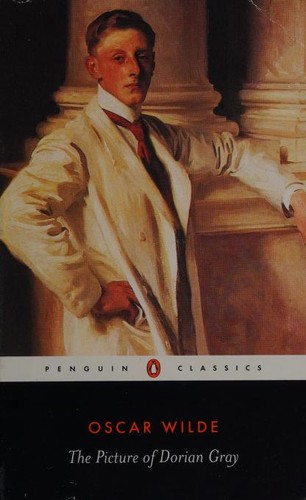
Talk to The Picture of Dorian Gray like its author wrote you back.
Get the ideas that fit your life — not generic summaries.
- Chat with the book
- Audiobook-style main ideas
- Adapts to your life and goals
- Helps you take action
What it argues
Dorian Gray is a beautiful young man who, on the day his portrait is painted, makes a wish — or perhaps a bargain, though no one is present to take the other side of it — that the portrait should age in his place. The wish comes true. Dorian remains perpetually young and beautiful while the painting absorbs every sin, every moral failure, every cruelty, gradually warping into something grotesque. He locks it in an attic and lives as he pleases.
Wilde's novel is an extended argument — playful, brilliant, and finally serious — about aestheticism, the philosophy that art is its own justification and beauty the only value worth pursuing. Lord Henry Wotton, the brilliant corrupter who plants the initial ideas in Dorian's head, is Wilde's mouthpiece for wit and paradox, and the novel is frankly more pleasurable in his scenes than in Dorian's later crimes. The philosophical provocations in the early chapters — about youth, pleasure, sin, and society — are more interesting than the Gothic horror that follows, which is somewhat mechanical by comparison.
What it gets right
- 1.
Lord Henry Wotton is the novel's most intellectually alive character, but Wilde shows that beautiful ideas do not have beautiful consequences — and Henry never has to face his.
- 2.
The portrait is both a supernatural device and a literalization of something psychologically real: the way we can keep living as if our choices have no cost while the cost accumulates elsewhere.
- 3.
The novel's aesthetic philosophy — beauty first, morality later — is both defended and destroyed by the story; Wilde was not naive about the argument he was making.
What it covers
Who wrote it
Oscar Wilde (1854–1900) was an Irish playwright, poet, novelist, and wit who became one of the most famous literary figures in London in the 1880s and 1890s. He is best known for his plays The Importance of Being Earnest, An Ideal Husband, and Lady Windermere's Fan, and for the prose poem The Ballad of Reading Gaol, written after his imprisonment. The Picture of Dorian Gray, his only novel, was published in 1890 and used as evidence against him at his 1895 trials for gross indecency. He was sentenced to two years of hard labor, effectively destroying his career and health. He died in Paris in 1900 at 46.
