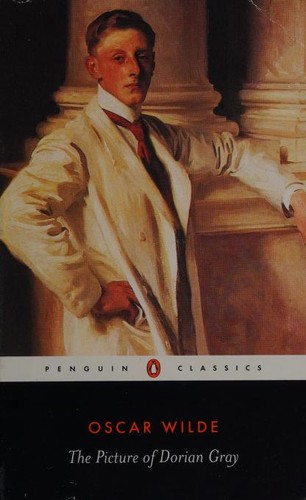
The Picture of Dorian Gray by Oscar Wilde is a 1890 literary fiction book about aestheticism and moral decay, vanity and the soul, art and life. Lord Henry Wotton is the novel's most intellectually alive character, but Wilde shows that beautiful ideas do not have beautiful consequences — and Henry never has to face his.
Summary
Dorian Gray is a beautiful young man who, on the day his portrait is painted, makes a wish — or perhaps a bargain, though no one is present to take the other side of it — that the portrait should age in his place. The wish comes true. Dorian remains perpetually young and beautiful while the painting absorbs every sin, every moral failure, every cruelty, gradually warping into something grotesque. He locks it in an attic and lives as he pleases.
Wilde's novel is an extended argument — playful, brilliant, and finally serious — about aestheticism, the philosophy that art is its own justification and beauty the only value worth pursuing. Lord Henry Wotton, the brilliant corrupter who plants the initial ideas in Dorian's head, is Wilde's mouthpiece for wit and paradox, and the novel is frankly more pleasurable in his scenes than in Dorian's later crimes. The philosophical provocations in the early chapters — about youth, pleasure, sin, and society — are more interesting than the Gothic horror that follows, which is somewhat mechanical by comparison.
There is a coded homosexual reading of the novel that Wilde could not make explicit and did not quite suppress. The relationship between the painter Basil Hallward and Dorian, and the way Lord Henry seduces Dorian intellectually, carry an erotic charge that the novel acknowledges through indirection. The 1890 version was censored and edited; the 1891 book version restored much of what had been cut. The novel was used as evidence against Wilde at his 1895 trial, with his own dialogue quoted back at him to imply his guilt.
As a reading experience, The Picture of Dorian Gray is uneven but memorable. The first half, dominated by Lord Henry's epigrams and the social world Dorian inhabits, is genuinely funny and intellectually alive. The second half, as Dorian descends into debauchery and murder, is more Gothic and less interesting as philosophy, though it builds to a conclusion that earns its weight. It is best read as a fable that Wilde could not quite contain within the moral form he had chosen — the ideas keep escaping the story.
Talk to The Picture of Dorian Gray like its author wrote you back.
Get the ideas that fit your life — not generic summaries.
- Chat with the book
- Audiobook-style main ideas
- Adapts to your life and goals
- Helps you take action
Key takeaways
- 1.
Lord Henry Wotton is the novel's most intellectually alive character, but Wilde shows that beautiful ideas do not have beautiful consequences — and Henry never has to face his.
- 2.
The portrait is both a supernatural device and a literalization of something psychologically real: the way we can keep living as if our choices have no cost while the cost accumulates elsewhere.
- 3.
The novel's aesthetic philosophy — beauty first, morality later — is both defended and destroyed by the story; Wilde was not naive about the argument he was making.
- 4.
The coding of homosexual desire through indirection was both a survival strategy and an artistic choice; the subtext is legible enough that Wilde's prosecutors had no trouble reading it.
- 5.
Basil Hallward, the painter who loves Dorian honestly, is the moral center of the novel, and the novel kills him halfway through.
- 6.
Sybil Vane's story is a compressed tragedy about what aestheticism costs the people who are aestheticized rather than the people who aestheticize.
- 7.
The ending is not a repudiation of Dorian's worldview but a reckoning — the portrait has been telling the truth about him all along, and the truth kills.
- 8.
The novel's famous epigrams work like traps: they sound true when Lord Henry says them, but the story demonstrates their human cost.
Discussion questions
Use these on your own, with a book club, or as chat starters in Superbook. Book club version, ready to copy or print →
- 1.
Lord Henry never does the things he advocates — he lectures on sin from a position of aristocratic safety. What does his exemption from consequences mean for the novel's argument?
- 2.
Is Dorian purely a victim of Lord Henry's influence, or does the novel suggest he chose what he became?
- 3.
Sybil Vane falls in love with Dorian and her art suffers for it. Dorian abandons her. What is Wilde saying about the relationship between love and aestheticism?
- 4.
Basil's love for Dorian is presented as pure and serious, while Henry's is predatory and intellectual. Why does the novel kill Basil and let Henry live comfortably?
- 5.
The portrait tells the truth. What does it mean that the only honest record of Dorian is kept hidden in an attic?
- 6.
Wilde's trial testimony echoed his own novel's dialogue. Does knowing the biographical context change how you read Lord Henry's speeches?
- 7.
The first two chapters are much more philosophically interesting than the final chapters, which are fairly conventional Gothic. Is that a failure of craft or does it say something true about where Wilde's actual interests lay?
- 8.
Compared to Frankenstein — another novel about a creation that turns on its maker — what does each book say about responsibility for what we bring into being?
- 9.
Is the ending a moral judgment on Dorian, or is it simply the mechanical working-out of the premise?
- 10.
Which of Lord Henry's epigrams do you find most genuinely persuasive? Most clearly wrong? Does separating them change how you think about the novel's argument?
- 11.
The novel was a scandal on publication. What would be scandalous about it now, and what would be mundane?
- 12.
Who is the novel actually about — Dorian, Basil, or Henry? Which character's story do you think Wilde cared most about?
Themes
Frequently asked questions
-
Is The Picture of Dorian Gray worth reading?
Yes, though it is a flawed novel. The first half — dominated by Lord Henry's wit and philosophical provocation — is brilliant. The second half is more uneven. It is worth reading for the ideas and for understanding Wilde's aesthetic philosophy, even where the story does not fully contain them.
-
Is The Picture of Dorian Gray hard to read?
No. Wilde's prose is clear and often very funny. The Gothic elements in the later chapters are conventional by modern standards. It reads quickly and pleasurably, especially the early chapters.
-
Is Dorian Gray queer literature?
Implicitly, yes. Wilde could not write explicitly about same-sex desire in 1890 without prosecution. The novel's homoerotic charge — in the relationships between Dorian, Basil, and Henry — was legible enough that it was used against Wilde in court. Modern queer readings of the text are supported by the evidence.
-
Why was the novel scandalous in 1890?
For its aesthetic philosophy (art has no moral duty), for its implied homosexual content, and for its apparent glorification of libertinism. The original magazine publication was edited to remove some of the most suggestive passages.
-
Is there an adaptation?
Many. The 2009 film with Ben Barnes and Colin Firth is the most recent significant adaptation. The story has also been adapted as a stage play, an opera, and numerous television productions.
-
Who shouldn't read this book?
Readers expecting a tightly plotted Gothic thriller. The plot is somewhat mechanical, especially in the second half. The novel's real pleasures are in Wilde's dialogue and ideas, not in the story.