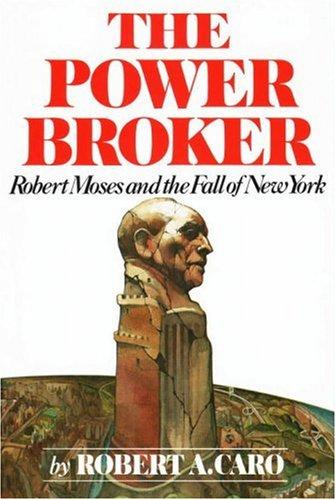
Talk to The Power Broker: Robert Moses and the Fall of New York like its author wrote you back.
Get the ideas that fit your life — not generic summaries.
- Chat with the book
- Audiobook-style main ideas
- Adapts to your life and goals
- Helps you take action
What it argues
Robert A. Caro's Pulitzer Prize-winning biography of Robert Moses — who held no elected office but who shaped New York City more profoundly than any of its mayors, governors, or presidents — is one of the most sustained and brilliant acts of investigative biography in American letters. Published in 1974 after seven years of research, it runs to 1,162 pages and is not a book that can be fairly summarized; what it achieves is the accumulated demonstration of a thesis through hundreds of specific, documented instances.
The thesis is simple and devastating: unelected administrative power, once concentrated in the hands of a man with vision, energy, and no accountability to voters, produces both extraordinary achievement and extraordinary harm, and the harm tends to accelerate as the power becomes unchallengeable. Moses built 658 playgrounds, 13 bridges, 416 miles of parkways, 35 highways, Jones Beach, Lincoln Center, Shea Stadium, and much of what New York calls parks. He also destroyed hundreds of thousands of homes, concentrated poverty in massive housing projects, built a highway system that strangled the city's economy, and did it all with a comprehensive contempt for the poor and for Black New Yorkers that was not incidental to his plans but architectural.
What it gets right
- 1.
Administrative power without accountability produces both achievement and harm, and the harm tends to outlast the achievement. Moses's highways are still causing damage; most of the parks he built are still beautiful.
- 2.
Procedural knowledge is power. Moses understood bond covenants, project authorities, and bureaucratic structures better than any politician of his era, which is how he made himself unchallengeable.
- 3.
Racism can be architectural. Moses's bridge clearances over parkways were deliberately built too low for buses, ensuring that Black New Yorkers who depended on public transit could not reach beaches and parks his highways served.
What it covers
Who wrote it
Robert A. Caro was born in New York City in 1935 and worked as an investigative reporter for Newsday before turning to biography. He has won two Pulitzer Prizes — for The Power Broker (1974) and for the third volume of his LBJ biography, Master of the Senate (2002) — and virtually every major award in American letters. His five-volume biography of Lyndon Johnson, begun in 1974, is still in progress; four volumes have been published. He is widely considered the greatest living practitioner of American political biography. He discussed his methods and philosophy in the memoir Working (2019).
