Talk to The Power of Habit like its author wrote you back.
Get the ideas that fit your life — not generic summaries.
- Chat with the book
- Audiobook-style main ideas
- Adapts to your life and goals
- Helps you take action
What it argues
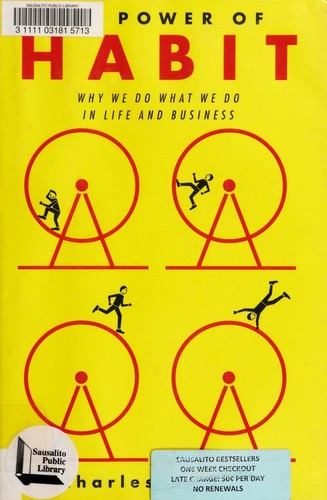
The Power of Habit is Charles Duhigg's investigation into why habits exist and how they can be changed. Drawing on neuroscience, psychology, and a wide range of case studies, Duhigg argues that habits are not destiny. They are encoded loops that the brain automates to save effort, and once you understand the structure of a loop you can intervene in it deliberately rather than fighting it with brute willpower.
The book's central framework is the habit loop: cue, routine, reward. A cue triggers an automatic behavior; the routine is the behavior itself; the reward is what the brain gets out of it and what cements the loop over time. Duhigg adds a fourth element — craving — to explain why loops persist: the brain begins anticipating the reward the moment it detects the cue, generating an urge that the routine satisfies. To change a habit, Duhigg's golden rule is to keep the old cue and the old reward but swap out the routine. The craving is the engine; you redirect it rather than try to shut it off.
What it gets right
- 1.
Habits operate as a loop: cue, routine, reward. The brain automates behaviors that reliably deliver a reward, freeing up mental bandwidth for other things.
- 2.
Craving drives the loop. Once the brain associates a cue with a coming reward, it begins anticipating that reward the moment it detects the cue. The craving is what makes habits hard to break.
- 3.
The golden rule of habit change: keep the cue and the reward, but swap out the routine. Fighting the craving directly is harder than redirecting it.
What it covers
Who wrote it
Charles Duhigg is a Pulitzer Prize-winning journalist and author who spent over a decade at The New York Times covering business and economics. The Power of Habit, published in 2012, became a New York Times bestseller and is widely used in business schools and corporate training programs. His second book, Smarter Faster Better (2016), applies a similar reporting-driven approach to the science of productivity. Duhigg has also written for The New Yorker and produces the podcast How to Change. He studied history at Yale and received an MBA from Harvard Business School.
