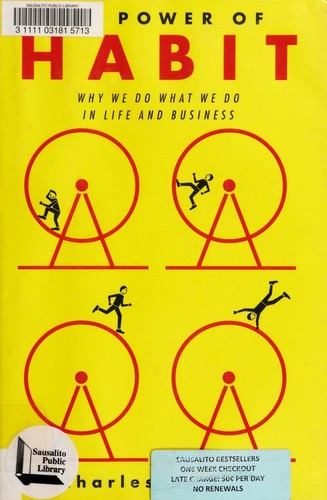
The Power of Habit by Charles Duhigg is a 2012 psychology book about habits, behavior change, neuroscience. Habits operate as a loop: cue, routine, reward. The brain automates behaviors that reliably deliver a reward, freeing up mental bandwidth for other things.
Summary
The Power of Habit is Charles Duhigg's investigation into why habits exist and how they can be changed. Drawing on neuroscience, psychology, and a wide range of case studies, Duhigg argues that habits are not destiny. They are encoded loops that the brain automates to save effort, and once you understand the structure of a loop you can intervene in it deliberately rather than fighting it with brute willpower.
The book's central framework is the habit loop: cue, routine, reward. A cue triggers an automatic behavior; the routine is the behavior itself; the reward is what the brain gets out of it and what cements the loop over time. Duhigg adds a fourth element — craving — to explain why loops persist: the brain begins anticipating the reward the moment it detects the cue, generating an urge that the routine satisfies. To change a habit, Duhigg's golden rule is to keep the old cue and the old reward but swap out the routine. The craving is the engine; you redirect it rather than try to shut it off.
The book moves across three scales. At the individual level, Duhigg covers habit change for personal behavior: exercise, eating, morning routines. At the organizational level, he examines how companies like Alcoa and Starbucks used keystone habits — high-leverage habits that trigger cascading improvements in other areas — to transform culture. At the societal level, he looks at social movements, showing how Rosa Parks and the Montgomery Bus Boycott succeeded where earlier, similar events had not, in part because of strong ties, weak ties, and peer habit among participants. The range is ambitious and the connective tissue is sometimes thin.
Duhigg writes like a journalist: the case studies are vivid and the storytelling is strong. The science is generally accurate but occasionally over-simplified, and some of the organizational chapters stretch the habit-loop metaphor farther than it comfortably reaches. Still, the core framework is genuinely useful, and the appendix on how to diagnose and change a personal habit is one of the more practical sections in any popular-psychology book of the last decade.
Talk to The Power of Habit like its author wrote you back.
Get the ideas that fit your life — not generic summaries.
- Chat with the book
- Audiobook-style main ideas
- Adapts to your life and goals
- Helps you take action
Key takeaways
- 1.
Habits operate as a loop: cue, routine, reward. The brain automates behaviors that reliably deliver a reward, freeing up mental bandwidth for other things.
- 2.
Craving drives the loop. Once the brain associates a cue with a coming reward, it begins anticipating that reward the moment it detects the cue. The craving is what makes habits hard to break.
- 3.
The golden rule of habit change: keep the cue and the reward, but swap out the routine. Fighting the craving directly is harder than redirecting it.
- 4.
Keystone habits are disproportionately powerful. Changing one high-leverage habit — exercise, diet, a morning routine — tends to trigger improvements in unrelated areas of life.
- 5.
Belief matters for lasting change. People who successfully reshape habits after major disruption — addiction recovery, trauma — often do so inside a community that reinforces a new identity.
- 6.
Organizations have habits too. Institutional routines and truces between departments shape what a company actually does, often independently of what leadership intends.
- 7.
Willpower is a muscle that fatigues. Spending it on one task depletes it for later ones, which is why habits matter: automated behavior requires no willpower at all.
- 8.
Social habits underpin social movements. Tight community bonds get people to participate; loose ties spread participation; shared identity sustains it.
Discussion questions
Use these on your own, with a book club, or as chat starters in Superbook. Book club version, ready to copy or print →
- 1.
Think of a habit you have that you didn't consciously choose. What is the cue, the routine, and the reward? When did it form?
- 2.
Duhigg's golden rule says to keep the cue and reward while changing the routine. What's a habit you'd want to change, and what alternative routine could serve the same reward?
- 3.
He argues that craving drives loops more than the reward itself. Can you find an example in your own life where you were pursuing the anticipation of a reward more than the reward?
- 4.
Which habit in your life would you nominate as a keystone habit — one that, if you changed it, would ripple through other behaviors?
- 5.
Duhigg says belief — often held within a community — is what allows habits to survive stress and disruption. Where does that belief come from for you?
- 6.
The Starbucks example focuses on training workers to handle emotional disruption using pre-committed routines. What situations in your life would benefit from a plan written out in advance?
- 7.
How does the organizational habits chapter change how you think about your own workplace or team? What are the unwritten routines that shape what actually happens there?
- 8.
The book treats willpower as finite. Looking at your own day, where are you spending it on tasks that could be automated into habits instead?
- 9.
Duhigg's account of social movements argues that strong ties get people to act and weak ties spread the action. Think of a change effort you've been part of — formal or informal. Which dynamic was more important?
- 10.
Some habits feel good to have even when you know they're not serving you well. What does the habit loop framework offer that willpower-based explanations don't?
- 11.
The book ends with a chapter on moral responsibility — whether knowing how habits work makes you more responsible for the ones you keep. Do you find that argument convincing?
- 12.
If you were designing an environment from scratch to make one good habit automatic, what would you change about your physical space, your schedule, or the people around you?
Themes
Frequently asked questions
-
What is The Power of Habit about?
It's a journalist's investigation into the neuroscience and psychology of habits, built around the cue-routine-reward loop. Duhigg covers individual behavior change, organizational culture, and social movements, arguing that understanding the structure of habits is the key to changing them.
-
Is The Power of Habit worth reading if you've already read Atomic Habits?
Yes, though the books overlap in places. Duhigg writes more like a narrative journalist — case studies, characters, scenes — while Clear is more prescriptive. The Power of Habit goes deeper on neuroscience and organizational behavior. They complement each other rather than duplicate.
-
How long does it take to read The Power of Habit?
Around five to five and a half hours at an average reading pace for the roughly 300-page book. The narrative structure moves quickly. The appendix on diagnosing and changing personal habits is short and worth reading separately as a practical guide.
-
What is the most actionable idea in the book?
The habit loop diagnostic in the appendix. Duhigg walks through how to identify the cue that triggers a specific behavior you want to change, experiment with different routines, and confirm what reward you're actually chasing. It turns an abstract framework into a concrete personal experiment.
-
Who should read The Power of Habit?
Anyone trying to understand why behavior is so hard to change and why willpower-based approaches so often fail. It's especially useful for managers and team leaders who want to think about organizational habits, not just personal ones. Less useful if you want a purely practical step-by-step system.
-
Does the book's science hold up?
Mostly, with some caveats. The core habit-loop model is well-grounded in behavioral research. Some case studies simplify or overstate the science, and the extension of habit-loop logic to social movements is more metaphorical than rigorous. Read it as informed journalism rather than a primary research review.
Similar books
The Power of Habit vs.
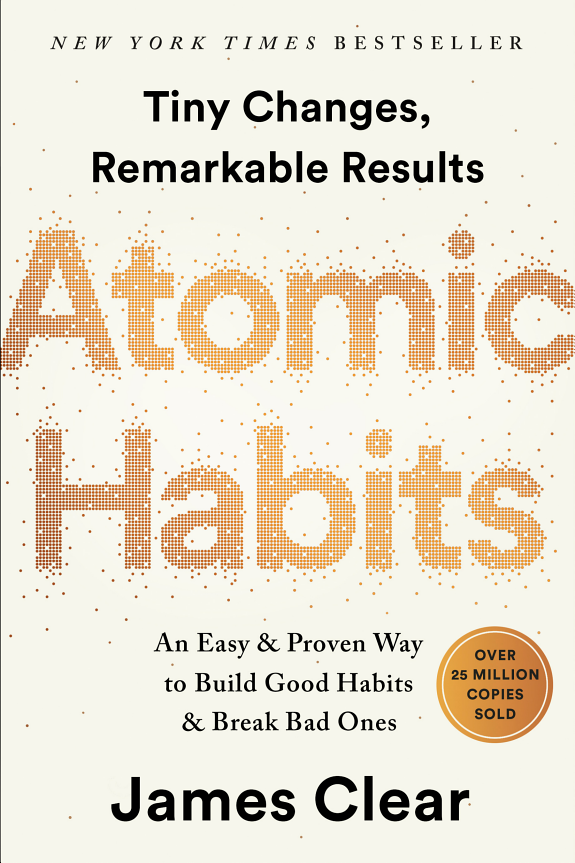
Deciding between two books? The Power of Habit vs Atomic Habits .
