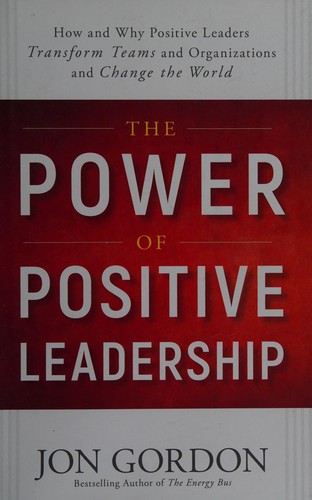
Talk to The Power of Positive Leadership like its author wrote you back.
Get the ideas that fit your life — not generic summaries.
- Chat with the book
- Audiobook-style main ideas
- Adapts to your life and goals
- Helps you take action
What it argues
The Power of Positive Leadership is Jon Gordon's argument that positivity is not a soft trait or a personality quirk — it's a competitive advantage that great leaders deliberately cultivate. Gordon has built a career around speaking to sports teams, corporations, and schools about positive culture and leadership, and this book is a concise summary of the practices he's seen work across those environments.
Gordon is careful to distinguish his version of positive leadership from naive optimism. He's not arguing that leaders should pretend problems don't exist or avoid difficult conversations. His case is that how a leader interprets challenges, frames the team's identity, and maintains energy under adversity has measurable effects on team performance and cohesion. Leaders who lead with fear, cynicism, or complaint produce those qualities in their organizations; leaders who model resilience and purpose produce those instead.
What it gets right
- 1.
Positive leadership is not naive optimism — it's the deliberate practice of framing challenges, modeling resilience, and building culture in ways that produce energy rather than drain it.
- 2.
A leader's emotional state is contagious. Fear-based leadership reliably produces fear-based cultures; purpose-driven leadership produces engagement.
- 3.
Culture is built through repeated behaviors and stories, not through annual offsites or value posters. The small daily choices add up faster than the big gestures.
What it covers
Who wrote it
Jon Gordon is an American speaker and author who has worked with numerous NFL, NBA, and college sports programs, as well as major corporations and schools. He is the author of more than twenty books, including The Energy Bus, The No Complaining Rule, and Training Camp. His work focuses on positive culture, leadership, and performance, and he speaks to millions of readers and audience members annually. He lives in Florida with his family.
