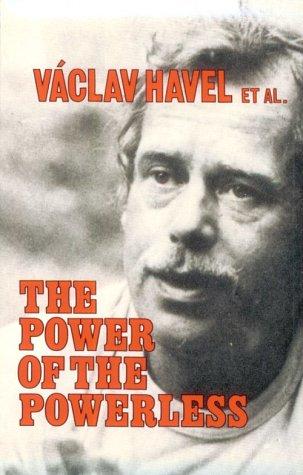
Talk to The Power of the Powerless like its author wrote you back.
Get the ideas that fit your life — not generic summaries.
- Chat with the book
- Audiobook-style main ideas
- Adapts to your life and goals
- Helps you take action
What it argues
Written in 1978 and circulated as samizdat in Czechoslovakia, Václav Havel's essay is one of the most penetrating analyses of how totalitarian power actually works — and how ordinary people can resist it without armies, parties, or manifestos. Havel's central insight is that the post-Stalinist communist system he calls "post-totalitarianism" does not primarily rule by naked force. It rules by getting people to participate in their own subjugation: to say things they don't believe, perform loyalty they don't feel, and sustain a lie that everyone knows is a lie but no one will name as such.
The greengrocer who puts a sign saying "Workers of the World, Unite!" in his shop window doesn't do it because he believes it. He does it to signal compliance, to avoid trouble, and to survive. Havel argues that this act of complicity is the system's true mechanism. Every person who "lives within the lie" — who performs the rituals without believing them — adds a brick to the wall. The system does not need true believers; it needs enough people going through the motions to make dissent look strange and isolated.
What it gets right
- 1.
Post-totalitarianism rules not primarily through force but through participation: by requiring citizens to perform rituals of loyalty they know are false, it makes everyone complicit in maintaining the lie.
- 2.
The greengrocer who displays a political slogan is not expressing belief — he is signaling compliance. This mechanism of routine complicity is the system's true power.
- 3.
Living within the lie does not require active endorsement. Silence, routine participation, and performance of expected roles are sufficient to sustain the system.
What it covers
Who wrote it
Václav Havel (1936–2011) was a Czech playwright, essayist, and dissident who became the last president of Czechoslovakia and the first president of the Czech Republic. His plays — including The Garden Party and The Memorandum — established his reputation before his political activity made him a target of the communist government. He was a founding signatory of Charter 77 and spent years under surveillance and in prison. After 1989, his political career tested the ideas he had developed in opposition against the reality of governing. He remained one of the twentieth century's most thoughtful voices on power, conscience, and civic life.
