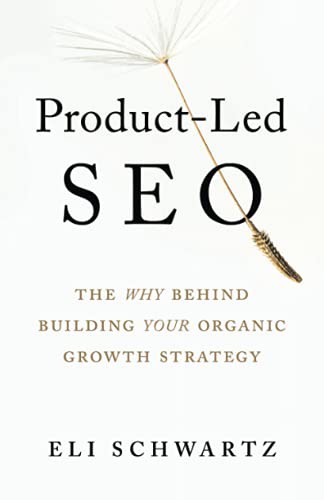
Talk to Product-Led SEO like its author wrote you back.
Get the ideas that fit your life — not generic summaries.
- Chat with the book
- Audiobook-style main ideas
- Adapts to your life and goals
- Helps you take action
Product-Led SEO, in detail
Product-Led SEO is Eli Schwartz's argument that the most durable organic search strategies don't come from content teams churning out articles — they come from product decisions. Schwartz draws on his experience leading SEO at SurveyMonkey and consulting for major tech companies to make a case that the companies winning search are ones that build the web in ways Google cannot ignore: large-scale user-generated content, deeply structured data, tools that create indexable output, and pages that answer specific queries at scale.
The book distinguishes between "SEO tactics" and "SEO strategy." Tactics — optimizing title tags, building backlinks, updating meta descriptions — are maintenance. Strategy is deciding what kind of product generates organic traffic as a byproduct of being useful. Schwartz argues that the highest-leverage SEO work is done by product managers and engineers, not marketers, because it shapes what the site actually is at a structural level.
A large portion of the book focuses on user intent. Schwartz insists that before building any content or feature for SEO, teams need to understand precisely what users are trying to accomplish when they search. A keyword volume number tells you how often people search; understanding the intent behind that search tells you what they need. Building pages that answer intent correctly — not just pages that contain the right words — is what separates lasting rankings from short-lived ones.
The weaknesses are real. The book is more useful for people working on product-heavy, scalable SEO (marketplaces, SaaS tools, directories) than for individuals or small content businesses. Schwartz writes with authority but occasionally stays at the strategic altitude when practitioners would benefit from examples at the implementation level. For product managers and growth leads who haven't thought carefully about organic, it reads as a clear correction.
The big ideas
- 1.
SEO strategy lives in product decisions, not content schedules. The companies with durable organic traffic built products that generate indexable value at scale.
- 2.
Tactics and strategy are different things. Optimizing existing pages is maintenance; deciding what kinds of pages to build is strategy.
- 3.
User intent, not search volume, should drive what you build. A keyword's volume tells you how many people search; intent tells you what they need when they do.
