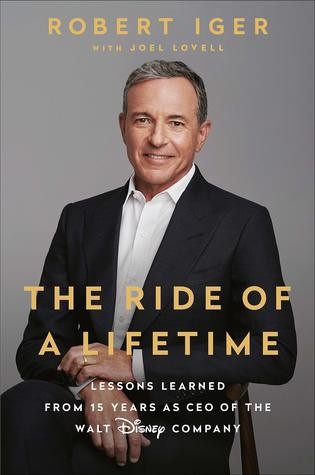
Talk to The Ride of a Lifetime like its author wrote you back.
Get the ideas that fit your life — not generic summaries.
- Chat with the book
- Audiobook-style main ideas
- Adapts to your life and goals
- Helps you take action
The Ride of a Lifetime, in detail
The Ride of a Lifetime is Robert Iger's account of his fifteen years as CEO of the Walt Disney Company, from his appointment in 2005 to his planned retirement in 2020. Iger turned around a company that many analysts had written off — hobbled by aging brand assets, a studio in creative decline, and a market capitalization that had stagnated for years — through a deliberate strategy of acquiring extraordinary creative assets and investing in the technology platforms to distribute them.
Iger's strategic framework for his tenure was organized around three priorities: recommitting to the importance of quality branded content (as opposed to diversification and volume), embracing technology rather than resisting it, and thinking globally about markets and talent. The acquisitions that defined his tenure — Pixar in 2006, Marvel in 2009, Lucasfilm in 2012, and 21st Century Fox in 2019 — were all consistent with these priorities. Iger is candid about the uncertainty involved in each negotiation and the internal opposition he faced, particularly from the Fox deal.
The Pixar acquisition is the most richly described. Iger had to rebuild a fractured relationship with Steve Jobs — who held a majority stake in Pixar — and then navigate the organizational integration of a company whose creative culture was fundamentally different from Disney's. His account of working with Jobs is one of the most candid portraits of Jobs in print, written with obvious affection but without the hagiography that characterizes many accounts.
The book is structured as a leadership memoir rather than a strategy playbook. Iger's principles — be authentic, be decisive, be optimistic, be curious — emerge from stories rather than frameworks. His account of the Disney-Pixar integration and his relationship with John Lasseter (later complicated by the #MeToo revelations that emerged after the book was completed) is the most detailed management narrative in the book.
The big ideas
- 1.
Strategy clarity enabled disciplined execution: Iger's three priorities — quality branded content, technology embrace, global thinking — guided every major decision for fifteen years.
- 2.
Acquisitions work best when they solve a clearly articulated strategic problem. Pixar, Marvel, Lucasfilm, and Fox each addressed a specific deficit in Disney's creative or technological position.
- 3.
Optimism is a leadership responsibility. Leaders who communicate anxiety and uncertainty without a credible path forward create paralysis in their organizations.
