The Ride of a Lifetime by Robert Iger is a 2019 business book about leadership, strategy, entrepreneurship. Strategy clarity enabled disciplined execution: Iger's three priorities — quality branded content, technology embrace, global thinking — guided every major decision for fifteen years.
Summary
The Ride of a Lifetime is Robert Iger's account of his fifteen years as CEO of the Walt Disney Company, from his appointment in 2005 to his planned retirement in 2020. Iger turned around a company that many analysts had written off — hobbled by aging brand assets, a studio in creative decline, and a market capitalization that had stagnated for years — through a deliberate strategy of acquiring extraordinary creative assets and investing in the technology platforms to distribute them.
Iger's strategic framework for his tenure was organized around three priorities: recommitting to the importance of quality branded content (as opposed to diversification and volume), embracing technology rather than resisting it, and thinking globally about markets and talent. The acquisitions that defined his tenure — Pixar in 2006, Marvel in 2009, Lucasfilm in 2012, and 21st Century Fox in 2019 — were all consistent with these priorities. Iger is candid about the uncertainty involved in each negotiation and the internal opposition he faced, particularly from the Fox deal.
The Pixar acquisition is the most richly described. Iger had to rebuild a fractured relationship with Steve Jobs — who held a majority stake in Pixar — and then navigate the organizational integration of a company whose creative culture was fundamentally different from Disney's. His account of working with Jobs is one of the most candid portraits of Jobs in print, written with obvious affection but without the hagiography that characterizes many accounts.
The book is structured as a leadership memoir rather than a strategy playbook. Iger's principles — be authentic, be decisive, be optimistic, be curious — emerge from stories rather than frameworks. His account of the Disney-Pixar integration and his relationship with John Lasseter (later complicated by the #MeToo revelations that emerged after the book was completed) is the most detailed management narrative in the book.
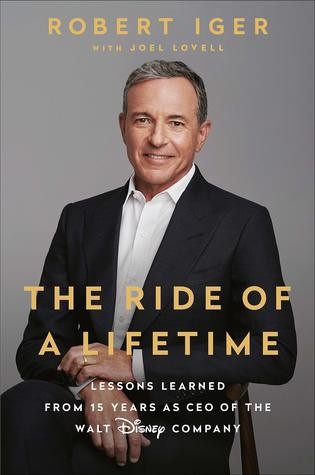
Talk to The Ride of a Lifetime like its author wrote you back.
Get the ideas that fit your life — not generic summaries.
- Chat with the book
- Audiobook-style main ideas
- Adapts to your life and goals
- Helps you take action
Key takeaways
- 1.
Strategy clarity enabled disciplined execution: Iger's three priorities — quality branded content, technology embrace, global thinking — guided every major decision for fifteen years.
- 2.
Acquisitions work best when they solve a clearly articulated strategic problem. Pixar, Marvel, Lucasfilm, and Fox each addressed a specific deficit in Disney's creative or technological position.
- 3.
Optimism is a leadership responsibility. Leaders who communicate anxiety and uncertainty without a credible path forward create paralysis in their organizations.
- 4.
Decisiveness requires accepting imperfect information. Waiting for certainty before deciding means deciding too late. The effective CEO acts with 75-80% of the information they'd ideally want.
- 5.
Relationship-building is strategic, not just interpersonal. Iger's personal relationships with Steve Jobs, George Lucas, and Rupert Murdoch were central to Disney's most important strategic moves.
- 6.
Creative culture cannot be reorganized into existence. The Pixar integration succeeded because Iger left the Pixar creative team intact rather than absorbing them into Disney's organizational structure.
- 7.
Authenticity under pressure: the leaders Iger most admires — including ABC's Roone Arledge — demonstrated consistent values in moments of crisis, not just in times of stability.
- 8.
Taking on complexity requires sufficient organizational capacity. The Fox acquisition was bold partly because Iger knew it would be the most operationally complex thing Disney had ever attempted.
Discussion questions
Use these on your own, with a book club, or as chat starters in Superbook. Book club version, ready to copy or print →
- 1.
Iger's three strategic priorities guided fifteen years of acquisitions and investments. How unusual is that level of strategic consistency? What organizational conditions make it possible?
- 2.
The Pixar acquisition required Iger to repair a personal relationship with Steve Jobs. How did Iger approach that, and what does it suggest about the role of interpersonal relationships in major strategic transactions?
- 3.
Iger describes being decisive with incomplete information. How do you calibrate the right threshold for action — not so low that you act recklessly, not so high that you act too late?
- 4.
Disney's acquisition strategy under Iger was acquisitions of creative assets. What is the theory of value creation behind that strategy, and what assumptions does it require to be true?
- 5.
Iger left Pixar's creative culture intact after acquisition. What made that the right decision, and what conditions would have made integration more appropriate?
- 6.
The book ends before the Disney+ streaming service was fully tested in the market. What does the Disney+ story — and the streaming wars broadly — say about Iger's technology embrace strategy?
- 7.
Iger's portraits of Steve Jobs and George Lucas are among the most vivid in the book. What do they tell you about how to work with deeply creative, difficult partners?
- 8.
The #MeToo revelations about John Lasseter emerged after the book was complete and create an awkward tension in how he's described. What does that remind you about the limits of personal knowledge in assessing leaders?
- 9.
Iger describes optimism as a leadership responsibility. What's the difference between genuine optimism and toxic positivity? How do you lead with optimism while still being honest about risks?
- 10.
What is the leadership lesson from how Iger handled his succession — the multiple planned retirements and returns? What does it say about CEO transitions at large organizations?
- 11.
Disney under Iger was criticized for relying too heavily on sequels and franchise properties. Does that criticism coexist with his legacy of great acquisitions, or does it undermine it?
- 12.
What is the single most transferable leadership lesson from Iger's tenure at Disney that applies outside the entertainment industry?
Themes
Frequently asked questions
-
Is The Ride of a Lifetime worth reading?
Yes. It is one of the best CEO memoirs of the past decade — well-written, candid, and organized around specific decisions rather than generic principles. The Pixar and Jobs sections alone are worth the read.
-
What are Iger's leadership principles?
He articulates ten principles throughout the book: lead with optimism, be courageous, be curious, be decisive, communicate honestly, commit fully, be authentic, stay focused, have integrity, and manage with an eye toward the future. They emerge from stories rather than being listed as a framework.
-
Is The Ride of a Lifetime about Disney or about leadership?
Both. The Disney history is the context, but the book's sustained subject is how Iger made decisions under uncertainty, managed relationships with extraordinarily difficult people, and maintained a strategic framework over fifteen years. The leadership principles are inseparable from the Disney story.
-
Does The Ride of a Lifetime cover the Disney+ launch?
The book was published in September 2019 and Disney+ launched in November 2019. Iger discusses the strategic decision to launch the streaming service but not its reception or the streaming wars that followed. For the post-2019 Disney story, you'll need other sources.
-
How does The Ride of a Lifetime compare to Creativity, Inc.?
Creativity, Inc. is Ed Catmull's account of building and running Pixar. The Ride of a Lifetime includes Iger's account of the acquisition and integration of Pixar. They complement each other and describe the same organization from different vantage points.
Similar books
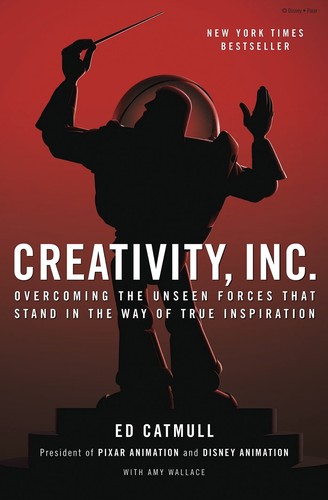
Creativity, Inc.: Overcoming the Unseen Forces That Stand in the Way of True Inspiration
Ed Catmull and Amy Wallace
Shoe Dog: A Memoir by the Creator of Nike
Phil Knight
The Everything Store: Jeff Bezos and the Age of Amazon
Brad Stone
No Rules Rules: Netflix and the Culture of Reinvention
Reed Hastings and Erin Meyer
