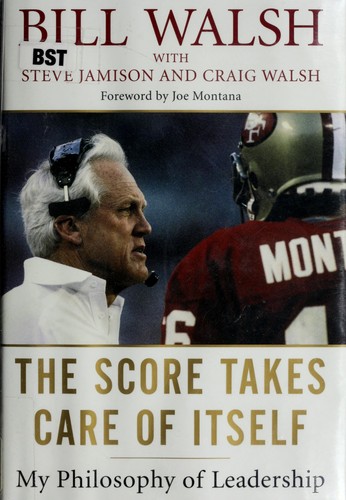
Talk to The Score Takes Care of Itself like its author wrote you back.
Get the ideas that fit your life — not generic summaries.
- Chat with the book
- Audiobook-style main ideas
- Adapts to your life and goals
- Helps you take action
What it argues
The Score Takes Care of Itself is the account of Bill Walsh's leadership philosophy, assembled from his writings and interviews by Steve Jamison and Craig Walsh after Walsh's death in 2007. Walsh transformed the San Francisco 49ers from the worst team in the NFL into a dynasty, winning three Super Bowls in the 1980s. The book is his most sustained attempt to articulate how he did it and what he learned about leadership from the experience.
Walsh's central concept is the Standard of Performance: a precisely defined set of behaviors, habits, and expectations that he believed would lead to excellence if followed consistently. The standard covered everything from how players stood in the huddle to how staff interacted with guests at the stadium. Walsh believed that if you got the performance right — if every person in the organization understood and met the standard — the results would follow. Hence: the score takes care of itself.
What it gets right
- 1.
The Standard of Performance defines precisely how the work is done — not just the outcome you want but the behavior and habits that produce it. The score follows from the standard.
- 2.
Leadership is first about defining and communicating your values and intentions to everyone in the organization, at every level, so that behavior is consistent whether you're watching or not.
- 3.
'Benevolent commander' means setting extremely high standards while genuinely caring about the people who are trying to meet them. The two aren't in tension — they reinforce each other.
What it covers
Who wrote it
Bill Walsh (1931–2007) coached the San Francisco 49ers to three Super Bowl championships (1981, 1984, 1988) and is widely regarded as one of the greatest coaches in the history of American football. He is credited with creating the West Coast offense, a passing system that influenced football at every level for decades. After retiring from the 49ers, Walsh returned to coach Stanford University's football program to a Pac-10 championship. The Score Takes Care of Itself was compiled by Steve Jamison and Craig Walsh from Walsh's writings, speeches, and recorded conversations.
