Talk to The Seat of the Soul like its author wrote you back.
Get the ideas that fit your life — not generic summaries.
- Chat with the book
- Audiobook-style main ideas
- Adapts to your life and goals
- Helps you take action
The Seat of the Soul, in detail
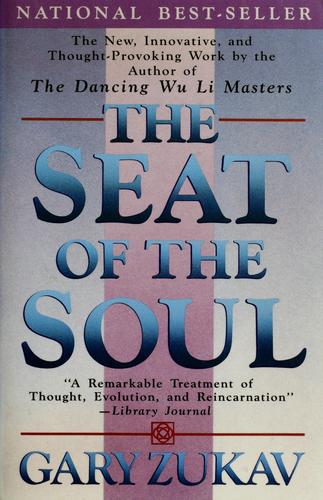
The Seat of the Soul, published in 1989, is Gary Zukav's attempt to construct a framework for human evolution centered not on the five senses but on the soul. Zukav argues that humanity is in the midst of a shift from external power — the ability to manipulate and control the physical world — to authentic power, which comes from aligning the personality with the soul. The soul, in his account, is the eternal part of the self engaged in a long arc of growth across multiple lifetimes.
Much of the book is organized around the idea of intention. Zukav claims that what matters is not the external action but the inner motivation behind it. An act of generosity rooted in fear of rejection is different in kind from the same act rooted in genuine compassion, even if no one outside you can tell the difference. This makes intention the true site of moral and spiritual life. Karma, in Zukav's reading, is not punishment but a mechanism for learning: the consequences you experience are calibrated to bring you face to face with the quality of your intentions.
Zukav also writes extensively about multisensory perception, the idea that humans are evolving beyond reliance on the five physical senses toward an awareness of nonphysical reality — guides, the energy of relationships, the intuitions that precede rational thought. He asks readers to take seriously that which cannot be measured. The chapters on relationships are especially direct: Zukav distinguishes between relationships built on need or fear and relationships of the soul, which he calls spiritual partnerships.
The book reads less like an argument and more like a map. It does not offer the empirical scaffolding that more skeptical readers will want. Its value lies in the vocabulary it gives for examining intention, in the seriousness with which it treats inner life, and in its insistence that the invisible dimensions of experience are not less real for being invisible. Readers open to that register will find it useful. Those who require claims to be falsifiable will find it frustrating.
The big ideas
- 1.
Authentic power comes not from controlling external circumstances but from aligning the personality with the soul's deepest intentions.
- 2.
Intention is more morally significant than action: the same deed can arise from fear or from love, and that inner difference is what karma tracks.
- 3.
Humanity is shifting from five-sensory perception to multisensory perception, which means becoming aware of non-physical influences on thought and behavior.
