Talk to The Secret History like its author wrote you back.
Get the ideas that fit your life — not generic summaries.
- Chat with the book
- Audiobook-style main ideas
- Adapts to your life and goals
- Helps you take action
The Secret History, in detail
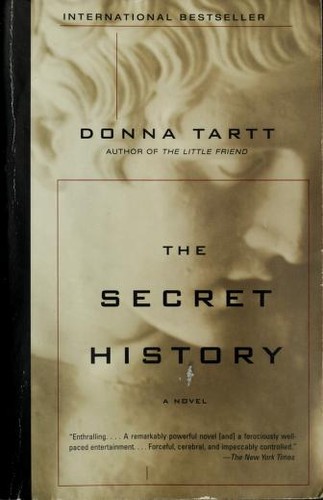
The Secret History opens with its ending: the narrator, Richard Papen, tells us on the first page that his friend Bunny is dead, and that he and four other students killed him. The novel then unspools backward and forward from that fact, explaining how a group of classics students at a small Vermont college called Hampden came to commit a murder, and what happened to them afterward. Tartt's structural gambit is that there is no mystery about who did it — the mystery is the how and the why, which turn out to be stranger and more disturbing than a conventional thriller would allow.
At the center of the novel is Julian, a charismatic classics professor who has gathered a small, exclusive group of students who study only with him. Richard, an outsider from California pretending to be something he isn't, is admitted to this circle and slowly absorbed into its ethos — an obsessive devotion to the Greeks, to beauty, to the idea that the divide between the ancient world and the modern one is a kind of poverty. What the group has actually done before Richard arrives, and what they do to maintain their secret, is the novel's true subject: not murder as crime but murder as a consequence of ideas taken too seriously.
Tartt writes in a rich, allusive style that matches her characters' classical education. The Vermont setting — autumn leaves, cold libraries, candlelit rooms — is rendered with the kind of sensory precision that makes the reader feel the world Richard inhabits, and why someone from a California strip mall might fall helplessly in love with it. The novel is long (over 500 pages) and it earns most of that length. The second half, which follows the group's psychological unraveling after Bunny's death, is in some ways more compelling than the buildup.
The Secret History is one of the most influential campus novels in American literature — it essentially created the dark academia aesthetic that has circulated in popular culture ever since. Its pleasures are real: the prose, the atmosphere, the slow revelation of exactly how these characters arrived at murder. Its limitations are also real: some of the secondary characters are thinly drawn, and the novel's moral universe can feel like it aestheticizes violence more than it interrogates it. Whether that is a flaw or the point is a question worth arguing.
The big ideas
- 1.
The inverted mystery structure — we know who died and who did it from page one — shifts the reader's attention from whodunit to why, which turns out to be a far more disturbing question.
- 2.
Julian's pedagogy is essentially cult formation: he creates a group that sees itself as superior, isolated, and exempt from ordinary moral constraints, and the murder is the logical end of that process.
- 3.
Richard's outsider status — his California origins, his family's poverty, his social performance of belonging — is the lens through which the reader is invited to find these people glamorous and then complicit in finding them glamorous.
