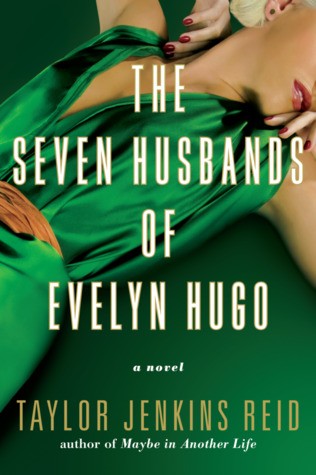
Talk to The Seven Husbands of Evelyn Hugo like its author wrote you back.
Get the ideas that fit your life — not generic summaries.
- Chat with the book
- Audiobook-style main ideas
- Adapts to your life and goals
- Helps you take action
The Seven Husbands of Evelyn Hugo, in detail
Evelyn Hugo is eighty-one, a reclusive Hollywood legend who has outlived her beauty, most of her enemies, and all seven of her husbands. When she grants a rare interview, she insists the journalist be Monique Grant — a young, unknown writer at a magazine that barely counts. No one can figure out why. Evelyn can. The novel moves between their present-day conversations and an extended flashback through six decades of Evelyn's life: her escape from a Cuban neighborhood in New York, her rise through the studio system, and the seven marriages that made her famous while hiding the one love that defined her.
The novel is fundamentally about the cost of hiding. Evelyn is bisexual, and the woman she loved most — actress Celia St. James — was also the one she could never publicly claim in the Hollywood of the 1950s through 1980s. Every husband was a calculation: protection from scandal, a career move, grief, or convenience. Reid is interested in how a person builds a public self so complete that even the private self starts to disappear, and what gets destroyed in the gap. The ambition is not treated as villainy. Evelyn makes choices that hurt people, including herself, because the alternative was erasure.
Reid structures the book as a frame narrative within extended flashback, and she's smart about it. Each husband gets his own section. The voice — Evelyn's first-person confession — is confident, candid, occasionally ruthless. Reid does not moralize. The pacing is commercial, but the material is heavier than the format suggests: immigration, race, sexuality, the mechanics of fame, and what women had to do to survive an industry built to use them. The novel became one of the defining BookTok phenomena partly because it delivers genuine emotional intensity within a readable package.
Readers who want propulsive narrative, a charismatic unreliable narrator, and emotional payoff will get all three. Readers who want literary prose or restrained character psychology will find Reid's approach too direct — she tells you exactly how to feel, which removes ambiguity but also removes friction. The ending is a real gut-punch. As Hollywood historical fiction, it lands harder than most; as a love story, it is both satisfying and genuinely sad.
The big ideas
- 1.
Public identity and private self can diverge so completely that the performance becomes a kind of self-destruction — Evelyn's entire life is a study in what it costs to hide.
- 2.
The novel takes seriously that ambition is not the enemy of love, but that the two can be structurally incompatible in certain historical moments.
- 3.
Reid shows Hollywood's studio system as a machine that required women to trade compliance for survival — the seven husbands are not weakness but strategy.
