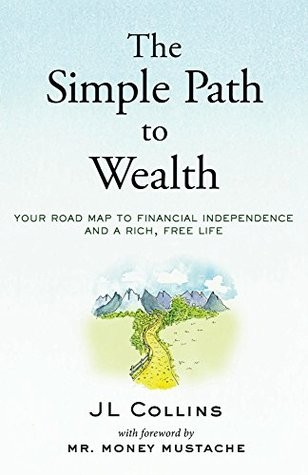
Talk to The Simple Path to Wealth like its author wrote you back.
Get the ideas that fit your life — not generic summaries.
- Chat with the book
- Audiobook-style main ideas
- Adapts to your life and goals
- Helps you take action
The Simple Path to Wealth, in detail
The Simple Path to Wealth is JL Collins's guide to building wealth and financial independence through a deliberately simple investment approach, originally written as a series of letters to his daughter. Collins is best known for his blog, jlcollinsnh.com, and the "stock series" of posts that became the foundation for this book. His approach is unapologetically simple: avoid debt, save aggressively, invest in a single low-cost total stock market index fund, and don't touch it.
Collins's investment thesis centers on VTSAX, Vanguard's Total Stock Market Index Fund, as a single-fund solution for wealth accumulation. His argument is that the US stock market has historically outperformed over long periods, that diversification across the entire market eliminates stock-specific risk, that Vanguard's ownership structure (owned by its funds, not by outside shareholders) uniquely aligns with investor interests, and that simplicity removes the behavioral temptation to tinker. He presents the case for holding a single fund against various objections and addresses the international diversification question specifically.
The book addresses the two phases of the investment lifecycle separately: the accumulation phase, during which you add money and let compounding work, and the distribution phase, during which you draw down the portfolio in retirement. The distribution phase is where the 4 percent rule appears — Collins discusses the research on sustainable withdrawal rates and explains why a portfolio that generates returns above inflation can, in most historical scenarios, support indefinite withdrawals at roughly 4 percent per year.
Collins writes with the directness and occasional bluntness of someone who has strong convictions and is not interested in false balance. He argues against bond allocations for younger investors, against international diversification, and against any investment complexity beyond the single-fund core. These positions are more aggressive than most evidence-based personal finance books would recommend, and readers should understand that they represent Collins's view rather than consensus. The book's value is in its clarity, its persuasive force, and its accessible treatment of financial independence as an achievable goal rather than an abstract aspiration.
The big ideas
- 1.
The single-fund solution: a total stock market index fund handles the wealth-accumulation need for most people in the accumulation phase. Complexity beyond this produces more risk than it eliminates.
- 2.
Avoid debt. Debt creates fragility, transfers wealth to lenders, and reduces the capital available for investment. The exception Collins makes is for mortgages on primary residences held to term.
- 3.
The 4 percent rule: a diversified portfolio can support withdrawals of 4 percent of the initial balance annually (adjusted for inflation) indefinitely in most historical scenarios.
