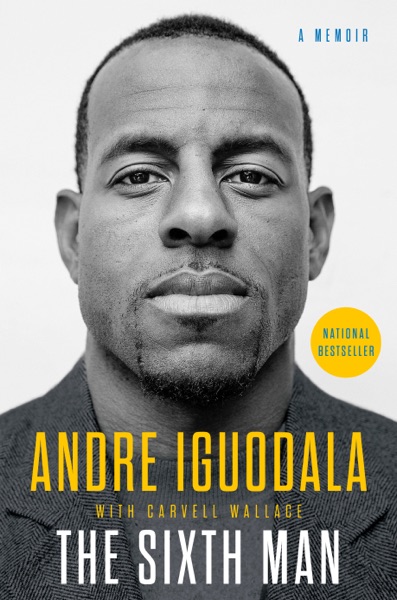
Talk to The Sixth Man like its author wrote you back.
Get the ideas that fit your life — not generic summaries.
- Chat with the book
- Audiobook-style main ideas
- Adapts to your life and goals
- Helps you take action
The Sixth Man, in detail
Andre Iguodala won four NBA championships and a Finals MVP award, but The Sixth Man is less interested in the games than in the social and psychological landscape those games happened inside. Written with Carvell Wallace, the book uses basketball as a frame for a wider set of questions about what it means to be a Black man in America, what institutions do to identity, and what happens when you become aware of the machinery around you in the middle of living inside it.
Iguodala grew up in Springfield, Illinois — not a glamorous origin story. His ascent to the NBA was linear and hard-working, but the book is careful not to turn that into a pull-yourself-up narrative. He is attentive throughout to the structures that shaped his path: the expectations coaches placed on Black players, the financial predation he witnessed around athletes with sudden money, the ways the league managed and packaged its players as products. The chapter on his time at Golden State is notable for describing the culture that produced the Warriors dynasty from the inside, including the intellectual environment Steve Kerr created and how unusual it felt compared to Iguodala's earlier stops.
The most distinctive parts of the book are the philosophical ones. Iguodala spent years reading widely — economics, psychology, African American history — and he brings that reading into the text directly, sometimes awkwardly, always earnestly. He writes about discovering W.E.B. Du Bois's concept of double consciousness and recognizing it in his own experience as a Black celebrity navigating predominantly white corporate spaces. The self-education narrative is not glamorized; he describes the alienation of being a public figure who has outgrown his early framework and is working out a new one in real time.
The title is deliberate. Coming off the bench is a specific kind of excellence — indispensable, undervalued, defined by what you sacrifice for the team rather than what you accumulate. Iguodala uses it as a metaphor for a broader posture toward life: doing necessary work that doesn't always get credited, staying ready for the moment when it counts, finding meaning in contribution rather than recognition.
The big ideas
- 1.
Coming off the bench requires a different psychology than starting — you must stay mentally locked in without the consistent rhythm that starters build over a game.
- 2.
Financial literacy is not taught in most communities where NBA players come from, and predatory financial advisors find their way to newly wealthy young players with alarming regularity.
- 3.
Du Bois's double consciousness — seeing yourself through the lens of those who see you as other — is a concept Iguodala identifies directly in his own experience as a Black athlete in a commercial league.
