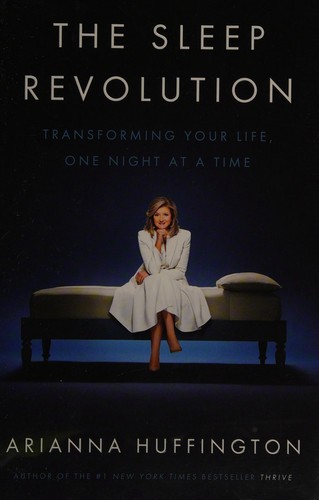
Talk to The Sleep Revolution like its author wrote you back.
Get the ideas that fit your life — not generic summaries.
- Chat with the book
- Audiobook-style main ideas
- Adapts to your life and goals
- Helps you take action
What it argues
Arianna Huffington opens The Sleep Revolution with the incident that prompted it: collapsing from exhaustion at her desk in 2007, breaking her cheekbone on the way down. From that starting point she builds a wide-ranging argument that modern culture treats sleep deprivation as a badge of honor and that this is making us sicker, less productive, and worse at everything we think we're gaining time to do. The book is a mix of science journalism, cultural history, and personal advocacy.
The first half surveys what sleep research has established in the past few decades. Sleep is not idle time. During sleep the glymphatic system clears toxic waste from the brain, including proteins associated with Alzheimer's disease. Memory consolidation happens predominantly during deep and REM sleep. The immune system repairs itself. Chronic sleep restriction — even modest reductions from eight hours to six — produces cognitive impairment comparable to going without sleep entirely for 24 hours, while subjects remain unaware of how impaired they are. Huffington draws on researchers including Matthew Walker and Charles Czeisler to present this case, though the book is written for a general audience rather than as a clinical text.
What it gets right
- 1.
Sleep deprivation is not a productivity strategy. People who sleep six hours or fewer consistently perform as if they've had no sleep at all, while believing they're functioning normally.
- 2.
The glymphatic system, active primarily during sleep, clears toxic waste from the brain. Chronic sleep loss is associated with increased Alzheimer's risk in part because this clearance is interrupted.
- 3.
Memory consolidation, immune function, emotional regulation, and metabolic health all depend heavily on adequate sleep. These are not optional side benefits.
What it covers
Who wrote it
Arianna Huffington is the co-founder and former editor-in-chief of The Huffington Post, which she built into one of the most widely read news platforms in the world before selling it to AOL in 2011. She subsequently founded Thrive Global, a corporate wellness company focused on combating burnout and sleep deprivation. She is the author of more than fifteen books, including Thrive and On Becoming Fearless. Her advocacy for sleep grew directly from her own experience with burnout and has since become the central theme of her public work.
