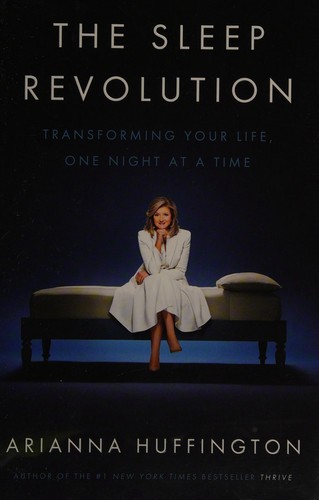
The Sleep Revolution by Arianna Huffington is a 2016 health book about sleep, health, productivity. Sleep deprivation is not a productivity strategy. People who sleep six hours or fewer consistently perform as if they've had no sleep at all, while believing they're functioning normally.
Summary
Arianna Huffington opens The Sleep Revolution with the incident that prompted it: collapsing from exhaustion at her desk in 2007, breaking her cheekbone on the way down. From that starting point she builds a wide-ranging argument that modern culture treats sleep deprivation as a badge of honor and that this is making us sicker, less productive, and worse at everything we think we're gaining time to do. The book is a mix of science journalism, cultural history, and personal advocacy.
The first half surveys what sleep research has established in the past few decades. Sleep is not idle time. During sleep the glymphatic system clears toxic waste from the brain, including proteins associated with Alzheimer's disease. Memory consolidation happens predominantly during deep and REM sleep. The immune system repairs itself. Chronic sleep restriction — even modest reductions from eight hours to six — produces cognitive impairment comparable to going without sleep entirely for 24 hours, while subjects remain unaware of how impaired they are. Huffington draws on researchers including Matthew Walker and Charles Czeisler to present this case, though the book is written for a general audience rather than as a clinical text.
The second half shifts toward culture and remedy. Huffington traces the glorification of sleeplessness through Silicon Valley startup culture, Wall Street, the military, and politics, and argues that the connection between sleep deprivation and poor decision-making is particularly dangerous when the people making consequential decisions are chronically exhausted. Her practical prescriptions are sensible if not novel: keep consistent sleep and wake times, keep the bedroom cool and dark, avoid screens before bed, limit caffeine after early afternoon, and transition to sleep through a short wind-down routine.
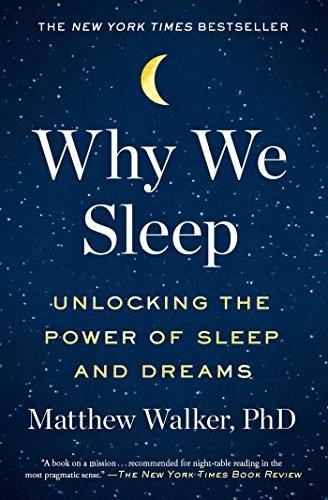
The Sleep Revolution is advocacy as much as information. Huffington is making a cultural argument as much as a scientific one, and readers who find the science in Matthew Walker's Why We Sleep more rigorous are right to note the difference. Still, as a readable case for taking sleep seriously, it covers the terrain well and includes enough corporate case studies and historical examples to make the cultural argument feel grounded.
Talk to The Sleep Revolution like its author wrote you back.
Get the ideas that fit your life — not generic summaries.
- Chat with the book
- Audiobook-style main ideas
- Adapts to your life and goals
- Helps you take action
Key takeaways
- 1.
Sleep deprivation is not a productivity strategy. People who sleep six hours or fewer consistently perform as if they've had no sleep at all, while believing they're functioning normally.
- 2.
The glymphatic system, active primarily during sleep, clears toxic waste from the brain. Chronic sleep loss is associated with increased Alzheimer's risk in part because this clearance is interrupted.
- 3.
Memory consolidation, immune function, emotional regulation, and metabolic health all depend heavily on adequate sleep. These are not optional side benefits.
- 4.
The culture of treating sleeplessness as a sign of dedication is both widespread and dangerous. Leaders who make high-stakes decisions while sleep-deprived are predictably worse at those decisions.
- 5.
Melatonin production is suppressed by blue light from screens, which delays sleep onset. Avoiding screens for an hour before bed is one of the few interventions with solid supporting evidence.
- 6.
Consistent sleep and wake times — even on weekends — anchor the circadian rhythm and improve sleep quality more than any single supplement or gadget.
- 7.
Short naps (ten to twenty minutes) can restore alertness without causing sleep inertia. Many high-performing cultures have used them; the aversion to napping is largely a Western post-Industrial Revolution artifact.
- 8.
The business case for sleep is real. Companies that have introduced sleep programs have seen measurable improvements in employee decision-making, creativity, and retention.
Discussion questions
Use these on your own, with a book club, or as chat starters in Superbook. Book club version, ready to copy or print →
- 1.
Huffington argues that the glorification of sleeplessness is a form of collective delusion. Where have you seen this most clearly in professional or social environments you've been in?
- 2.
The research suggests people are often the last to know they're cognitively impaired from sleep loss. How would you even detect this in yourself?
- 3.
What trade-offs have you made with sleep in the past year that in retrospect look less defensible than they seemed at the time?
- 4.
Huffington's own catalyst was collapsing from exhaustion. What's the equivalent moment that would actually change your sleep behavior, and have you had it yet?
- 5.
The book argues that screens before bed delay sleep. Given how embedded evening screen use is in most households, what realistic change would actually help?
- 6.
Consistent sleep timing is presented as more important than total hours. How much does your schedule actually allow for consistency, and what would it cost to protect it?
- 7.
Huffington identifies Silicon Valley startup culture as a driver of sleep deprivation. To what extent is the problem cultural versus structural — impossible schedules, open offices, always-on communication?
- 8.
The nap chapters suggest short naps restore performance. What social or professional obstacles actually prevent people from napping, and are those obstacles worth challenging?
- 9.
Huffington is a high-profile executive writing partly from personal experience. Does that make her argument more or less persuasive to you than a researcher writing the same book?
- 10.
What would a workplace that genuinely valued employee sleep actually look like — in policies, scheduling, and culture?
- 11.
The book covers what to do at night. How much does what you do during the day — light exposure, exercise, caffeine timing — actually shape your sleep?
- 12.
If you could change one thing about how your household handles sleep, what would it be?
Themes
Frequently asked questions
-
Is The Sleep Revolution worth reading if I've already read Why We Sleep?
It depends on what you're after. Why We Sleep is more rigorous on the science. The Sleep Revolution is more focused on cultural change and workplace implications. If the science is already familiar, Huffington's corporate case studies and cultural analysis are the distinctive contribution. The books complement rather than repeat each other.
-
How long does it take to read The Sleep Revolution?
Around five to six hours. At roughly 352 pages it reads quickly — Huffington's style is accessible and the chapters are short. Readers with a background in sleep research may skim the science sections and focus on the cultural and practical content.
-
What is the main argument of The Sleep Revolution?
That modern culture treats sleep deprivation as a productivity strategy when the opposite is true, that the science on this is now clear, and that individuals and organizations need to restructure around adequate sleep rather than sacrificing it for other goals.
-
What are the most actionable takeaways from The Sleep Revolution?
Keep consistent sleep and wake times. Avoid screens for an hour before bed. Keep the bedroom cool and dark. Avoid caffeine after early afternoon. Establish a short wind-down routine. These recommendations are well-supported and simple, even if none of them are new.
-
Who should read The Sleep Revolution?
People in high-pressure professional environments who routinely underslept and want the scientific and cultural case explained clearly. Also useful for managers and executives thinking about team performance and culture. Those looking for deep sleep science should start with Why We Sleep instead.