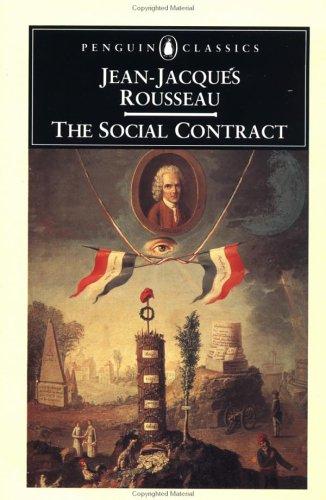
Talk to The Social Contract like its author wrote you back.
Get the ideas that fit your life — not generic summaries.
- Chat with the book
- Audiobook-style main ideas
- Adapts to your life and goals
- Helps you take action
What it argues
The Social Contract opens with one of philosophy's most famous sentences: "Man is born free, and everywhere he is in chains." Rousseau's 1762 treatise sets out to explain how political authority can be legitimate rather than merely imposed by force. The question was urgent in an age of absolute monarchy, but the answer Rousseau gave would feed into both democratic revolutions and, critics argue, later forms of political totalitarianism.
The central idea is the social contract: a hypothetical agreement through which individuals surrender natural freedom in exchange for civil freedom under a government they have collectively authorized. Crucially, Rousseau argues that genuine sovereignty resides only in the people as a whole, not in any monarch, aristocracy, or representative assembly. The "general will" — the common interest of citizens rather than the sum of private interests — is the only legitimate basis for law. A government that fails to express the general will has lost its legitimacy.
What it gets right
- 1.
Political authority is only legitimate when it derives from a genuine social contract among citizens, not from conquest, tradition, or divine right.
- 2.
Sovereignty belongs permanently to the people and cannot be transferred, alienated, or represented. Rousseau uses this to criticize parliamentary government as a form of popular abdication.
- 3.
The 'general will' is not majority preference but the common interest of citizens as citizens — what each person would want if they were thinking about the community rather than themselves alone.
What it covers
Who wrote it
Jean-Jacques Rousseau (1712–1778) was a Genevan-born philosopher whose ideas on education, politics, and human nature made him one of the defining thinkers of the Enlightenment. His other major works include Discourse on the Origin of Inequality, Emile, and Confessions, an autobiographical work that helped establish modern autobiography as a form. Rousseau's relationship with the philosophes of his era was contentious, and he spent periods of his later life in exile. His ideas on natural goodness, popular sovereignty, and education continue to generate debate in political theory and educational philosophy.
