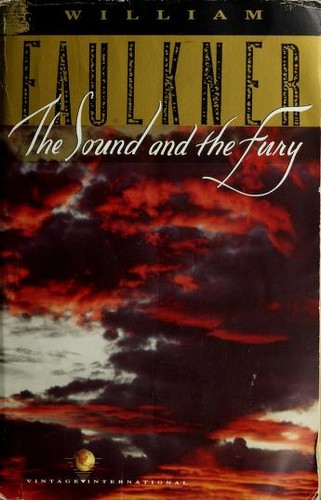
Talk to The Sound and the Fury like its author wrote you back.
Get the ideas that fit your life — not generic summaries.
- Chat with the book
- Audiobook-style main ideas
- Adapts to your life and goals
- Helps you take action
What it argues
The Sound and the Fury is widely considered Faulkner's greatest novel, and it is genuinely one of the most formally radical works in American fiction. Published in 1929, it tells the story of the decline of the Compson family — once aristocratic Mississippi gentry, now spiritually and materially ruined — through four separate narratives, each with a different narrator and a different relationship to time. Faulkner does not make this easy. He does not want it to be easy.
The first section is narrated by Benjy, a cognitively disabled man in his thirties who has no linear sense of time — past and present are equally vivid to him, and the narrative shifts between them without warning. The second is narrated by Quentin, a Harvard student on the day of his suicide, moving between present action and obsessive memory. The third is narrated by Jason, the most conventionally readable of the three — bitter, petty, and mean — as he processes his failures as a businessman and a man. The fourth shifts to a third-person omniscient perspective and centers on Dilsey, the Black servant who has held the family together and who witnesses, with something like compassion, its final collapse. The novel's famous conclusion at the Easter Sunday church service, where Dilsey weeps for "the first and the last," is often cited as among the most powerful endings in American fiction.
What it gets right
- 1.
Form as argument: the four-section structure forces you to experience time the way each Compson does — as chaos (Benjy), as obsession (Quentin), as resentment (Jason), and as witnessed tragedy (Dilsey/third person).
- 2.
Caddy Compson, the novel's emotional center, has no section of her own — she exists only through her brothers' perceptions of her, which is itself a statement about the position of women in this world.
- 3.
The Compson decline is the South's decline made personal. Quentin's Harvard scholarship, funded by selling Benjy's pasture, represents everything sacrificed to maintain appearances.
What it covers
Who wrote it
William Faulkner (1897–1962) was an American novelist and short story writer from Mississippi, generally considered one of the most technically innovative writers in American literary history. He spent most of his life in Oxford, Mississippi, near which his fictional Yoknapatawpha County is set. His major works include The Sound and the Fury, As I Lay Dying, Light in August, Absalom, Absalom!, and The Bear. He was awarded the Nobel Prize in Literature in 1949 primarily for his depictions of the American South's history and its psychological aftermath.
