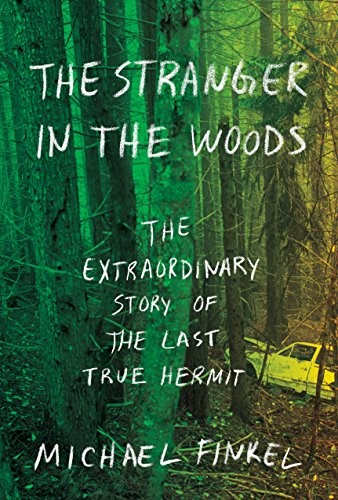
Talk to The Stranger in the Woods: The Extraordinary Story of the Last True Hermit like its author wrote you back.
Get the ideas that fit your life — not generic summaries.
- Chat with the book
- Audiobook-style main ideas
- Adapts to your life and goals
- Helps you take action
What it argues
In 1986, a twenty-year-old named Christopher Knight drove into the woods of central Maine, abandoned his car, and walked into the forest. He did not speak to another human being for twenty-seven years. He never bought food. He never held a job. He survived by raiding the summer camps surrounding North Pond, stealing groceries, propane tanks, and whatever else he needed to endure Maine's brutal winters. He was finally caught in 2013, a man in his mid-fifties who had spent most of his adult life entirely alone.
Michael Finkel, a journalist who had covered Knight's arrest, became obsessed with the question at the center of the story: why? Knight himself resisted easy answers. He hadn't suffered trauma. He wasn't fleeing persecution. He simply felt an overwhelming need to be alone, a revulsion from the social world so complete that he walked away from it and never looked back. Finkel visited Knight in jail, corresponded with him, and spent years trying to understand a man who had, by almost any measure, succeeded at something most people only fantasize about.
What it gets right
- 1.
Christopher Knight lived alone in the Maine woods from 1986 to 2013, surviving by stealing from nearby camps and avoiding all human contact.
- 2.
Knight never claimed a dramatic reason for his retreat — no trauma, no ideology. He simply found solitude preferable to society, a fact that resisted most frameworks for understanding him.
- 3.
Hermits appear across history and culture, from the Desert Fathers to Thoreau. The impulse to withdraw from society is ancient and not inherently pathological.
What it covers
Who wrote it
Michael Finkel is an American journalist who has written for National Geographic, Rolling Stone, and The New York Times Magazine. He is also the author of The Art Thief, about a French museum robber who stole hundreds of works over decades. Finkel's earlier book True Story recounts his unlikely correspondence with a murderer while Finkel was himself under scrutiny for a fabricated magazine article — an experience that gave him a nuanced view of people who exist outside social norms. He lives in Montana.
