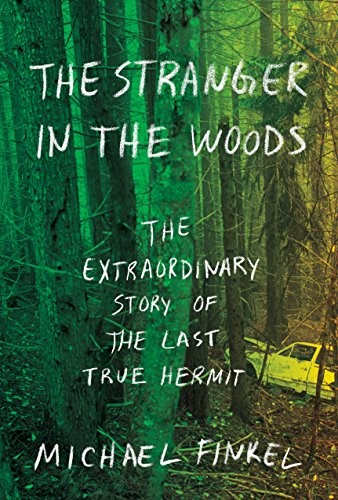
The Stranger in the Woods: The Extraordinary Story of the Last True Hermit by Michael Finkel is a 2017 memoir book about solitude, wilderness, identity. Christopher Knight lived alone in the Maine woods from 1986 to 2013, surviving by stealing from nearby camps and avoiding all human contact.
Summary
In 1986, a twenty-year-old named Christopher Knight drove into the woods of central Maine, abandoned his car, and walked into the forest. He did not speak to another human being for twenty-seven years. He never bought food. He never held a job. He survived by raiding the summer camps surrounding North Pond, stealing groceries, propane tanks, and whatever else he needed to endure Maine's brutal winters. He was finally caught in 2013, a man in his mid-fifties who had spent most of his adult life entirely alone.
Michael Finkel, a journalist who had covered Knight's arrest, became obsessed with the question at the center of the story: why? Knight himself resisted easy answers. He hadn't suffered trauma. He wasn't fleeing persecution. He simply felt an overwhelming need to be alone, a revulsion from the social world so complete that he walked away from it and never looked back. Finkel visited Knight in jail, corresponded with him, and spent years trying to understand a man who had, by almost any measure, succeeded at something most people only fantasize about.
The book braids Knight's story with Finkel's own reporting and a wide survey of the history of hermits — religious recluses, literary solitude-seekers from Thoreau to the Desert Fathers, and the small number of people across history who genuinely vanished from society by choice. Finkel is honest about the ethical complexity. Knight stole from families who saved for years to rent those camps, and some of those thefts caused real hardship. His freedom was not free; it was subsidized by strangers who never consented to pay.
The book is short and reads fast, almost novelistic in pace. It works best as a provocation rather than a resolution. Finkel doesn't try to fully explain Knight, and perhaps that's the right choice. The stranger in the woods remains strange at the end. What the book does instead is force the reader to examine their own relationship to solitude, society, and the implicit contracts that bind us to one another whether we signed them or not.
Talk to The Stranger in the Woods: The Extraordinary Story of the Last True Hermit like its author wrote you back.
Get the ideas that fit your life — not generic summaries.
- Chat with the book
- Audiobook-style main ideas
- Adapts to your life and goals
- Helps you take action
Key takeaways
- 1.
Christopher Knight lived alone in the Maine woods from 1986 to 2013, surviving by stealing from nearby camps and avoiding all human contact.
- 2.
Knight never claimed a dramatic reason for his retreat — no trauma, no ideology. He simply found solitude preferable to society, a fact that resisted most frameworks for understanding him.
- 3.
Hermits appear across history and culture, from the Desert Fathers to Thoreau. The impulse to withdraw from society is ancient and not inherently pathological.
- 4.
Solitude and loneliness are not synonyms. Knight reported not feeling lonely. The distinction between chosen isolation and forced isolation is significant.
- 5.
Knight's survival depended on meticulous planning, extreme self-discipline, and an almost total suppression of risk. He took nothing for granted and wasted nothing.
- 6.
His freedom had a cost he didn't pay himself. The camps he raided bore that cost, and Finkel does not let either Knight or the reader forget it.
- 7.
The response from locals was mixed. Some were frightened; others were oddly fascinated or even sympathetic, as if Knight had acted on a fantasy they recognized.
- 8.
Reintegration proved harder than survival. After his arrest, Knight found navigating the social world more disorienting than any Maine winter.
Discussion questions
Use these on your own, with a book club, or as chat starters in Superbook. Book club version, ready to copy or print →
- 1.
Knight walked away from society without trauma or manifesto. Is there a version of that impulse — however muted — that you recognize in yourself?
- 2.
Finkel raises the ethics of Knight's thefts directly. Can a life of radical solitude ever be morally clean if it depends on taking from others?
- 3.
The book surveys hermits across history, from religious recluses to Thoreau. What distinguishes chosen solitude from antisocial withdrawal?
- 4.
Knight reportedly did not feel lonely during his twenty-seven years. What does that suggest about the relationship between solitude and social need?
- 5.
If Knight had lived in a society that provided for him without requiring social participation, would his choice look different morally?
- 6.
Finkel is drawn to Knight in ways he admits he doesn't fully understand. What do you think the author is really looking for in telling this story?
- 7.
The locals near North Pond were both victims of Knight's thefts and, in some cases, quietly admirers of his accomplishment. How do you reconcile those two responses?
- 8.
Knight seems to lack regret about his years alone but expresses difficulty adjusting to jail and to human contact. What does that tell you about the nature of adaptation?
- 9.
Would Knight's story read differently if it were a woman who had done the same thing? What assumptions about gender shape how we receive accounts of radical solitude?
- 10.
Thoreau spent two years at Walden, then left. Knight spent twenty-seven, then was forced out. Does the length of the commitment change the meaning of it?
- 11.
After reading this book, did your sense of what constitutes a wasted life shift at all? Why or why not?
- 12.
What would you personally lose if you disappeared from society for a year? What might you discover?
Themes
Frequently asked questions
-
Is The Stranger in the Woods worth reading?
Yes, particularly if you're drawn to questions about solitude, identity, and the social contract. It's a fast read — under 250 pages — with a genuinely unusual subject. The ethical complications keep it from being a simple celebration of one man's eccentricity.
-
How long is The Stranger in the Woods?
Around four and a half hours at average reading pace. The book is short and propulsive, closer to long-form journalism expanded into a book than a traditional narrative nonfiction work.
-
What is The Stranger in the Woods about?
It's the story of Christopher Knight, who spent twenty-seven years alone in the Maine woods, surviving by stealing from nearby camps. Journalist Michael Finkel profiles Knight after his 2013 arrest and tries to understand what drove him into the woods and what kept him there.
-
Who should read The Stranger in the Woods?
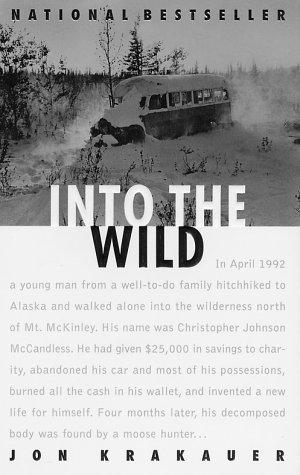
Readers who liked Into the Wild or Wild will find it compelling. It's also suited to anyone interested in the psychology of solitude, the ethics of radical individualism, or simply a strange and well-told true story.
-
Did Christopher Knight enjoy solitude or was he mentally ill?
Finkel explores both possibilities without settling for an easy answer. Knight passed psychological evaluations and showed no signs of psychosis. He appears to have genuinely preferred isolation — a preference that doesn't map neatly onto diagnostic categories.