Talk to The Telomere Effect like its author wrote you back.
Get the ideas that fit your life — not generic summaries.
- Chat with the book
- Audiobook-style main ideas
- Adapts to your life and goals
- Helps you take action
What it argues
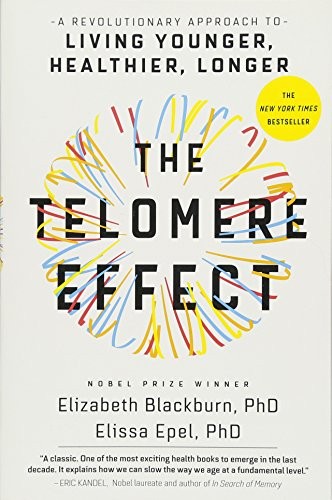
Elizabeth Blackburn shared the 2009 Nobel Prize in Physiology or Medicine for discovering telomerase, the enzyme that maintains and extends telomeres — the protective caps at the ends of chromosomes. The Telomere Effect, co-authored with health psychologist Elissa Epel, translates that research into a practical guide for maintaining cellular health. The central argument is that biological aging happens cell by cell, and that the rate at which your cells age is significantly influenced by lifestyle factors that people can actually change.
Telomeres shorten naturally each time a cell divides. When they become too short, the cell enters a state called senescence — it stops dividing and begins secreting inflammatory compounds that damage surrounding tissue. This senescent cell accumulation drives many of the features of aging and age-related disease. Blackburn and Epel argue that behaviors and psychological states that increase chronic stress accelerate telomere shortening, while protective factors — exercise, sleep, certain dietary patterns, social connection, and stress reduction practices — slow or even partially reverse it through upregulating telomerase.
What it gets right
- 1.
Telomeres are the protective end-caps on chromosomes. Their length is a marker of cellular age, and their shortening is the cellular mechanism underlying many aspects of biological aging.
- 2.
Telomerase, the enzyme Blackburn discovered, can lengthen telomeres. Its activity is upregulated by exercise, sleep, and stress reduction, and downregulated by chronic stress and certain dietary patterns.
- 3.
Senescent cells — those with critically short telomeres — stop dividing and secrete inflammatory compounds that accelerate aging in surrounding tissue. Clearing senescent cells is an active area of longevity research.
What it covers
Who wrote it
Elizabeth Blackburn is a molecular biologist and professor at the University of California, San Francisco, who shared the 2009 Nobel Prize in Physiology or Medicine with Carol Greider and Jack Szostak for the discovery of telomerase. Her research established the fundamental mechanism by which chromosomes are protected during cell division and how that protection degrades with age. She has also served as president of the Salk Institute. Elissa Epel, her co-author, is a professor of psychiatry at UCSF who directs the Aging, Metabolism, and Emotion Center and has conducted extensive research on stress, behavior, and cellular aging.
